Colias croceus
This is a fairly-common migratory species from southern Europe, and for 2006-2024 the “average first sighting” was May 4th (range between March 21st and July 23rd). It has been recorded as resident in the Newhaven area on two occasions, when there was over-wintering in 2018/2019 and again in 2021/2022. On the very early date of 25/03/2022 there was egg-laying on Crown Vetch (in a Newhaven garden). In Sussex, there are usually a few sightings in April and May, but larger numbers are generally seen between late July and October, when there is a mixture of Sussex-born individuals and fresh immigration.
Clouded Yellow is a very distinctive species, and identification should be reasonably straightforward. The uppersides of the males are usually more orange than yellow and there are broad dark brown/black bands on the outer margins of the wings. Females are similar but the dark marginal bands are broken up with several large creamy-yellow blocks. The undersides are greenish-yellow, and in the middle of the hindwing there is a red figure-of-eight, with silvery-white in the centre of the two rings. With wings firmly closed, the undersides blend in with their background and a Clouded Yellow perched on a suitable leaf (Euonymus, in my Storrington garden) is beautifully camouflaged, and impossible to spot. Some 5-15% of females are the helice form, and they have cream uppersides, instead of orange/yellow. Helice are easy-enough to identify, but there is always the potential for confusion with Pale Clouded Yellow. As the latter has now become a very rare species in the UK, it is not often that we have to grapple with this dilemma.
Clouded Yellows mostly lay their eggs on Lucerne and a variety of clover species. A field of Lucerne in a coastal area may attract a dozen or more egg-laying Clouded Yellows but as Lucerne is a commercial crop, the outcome for the eggs/larvae is not likely to be a good one. Other larval foodplants include Birdsfoot Trefoil, Horseshoe Vetch, Crown Vetch and Black Medick and should this butterfly become firmly established in Sussex as a resident species then the regular use of these native legumes is likely to be pivotal. In recent years, egg-laying has been recorded in October at Cissbury Ring and Medley Bottom nr Amberley, and the native plants used were Birdsfoot Trefoil and Horseshoe Vetch.
There is good evidence that autumnal, reverse migration does take place, but collecting direct evidence is far from straightforward. The best month to witness reverse migration is October and currently the best location is probably Thorney Island. Significant numbers of these butterflies may congregate on Thorney Island for a day or so, held back by poor weather, only for them to all disappear the next day when the weather conditions have improved.
With climate change and a succession of mild winters, it would not be surprising if this species begins over-wintering on a more regular basis. We need to seriously consider over-wintering for any record in the first half of April, and that suspicion must be raised to a much higher level for any record in March.
As for most migratory species, Clouded Yellows may be plentiful one year but very scarce, the next. Any downland location may be productive but the area between Birling Gap and Beachy Head is worth a visit, as is Chantry Hill, Mill Hill and Steyning Downland Scheme. Away from downland, Thorney Island is often a good location to see these butterflies, in both spring and autumn. In late autumn, Cissbury Ring and Medley Bottom are favoured locations.
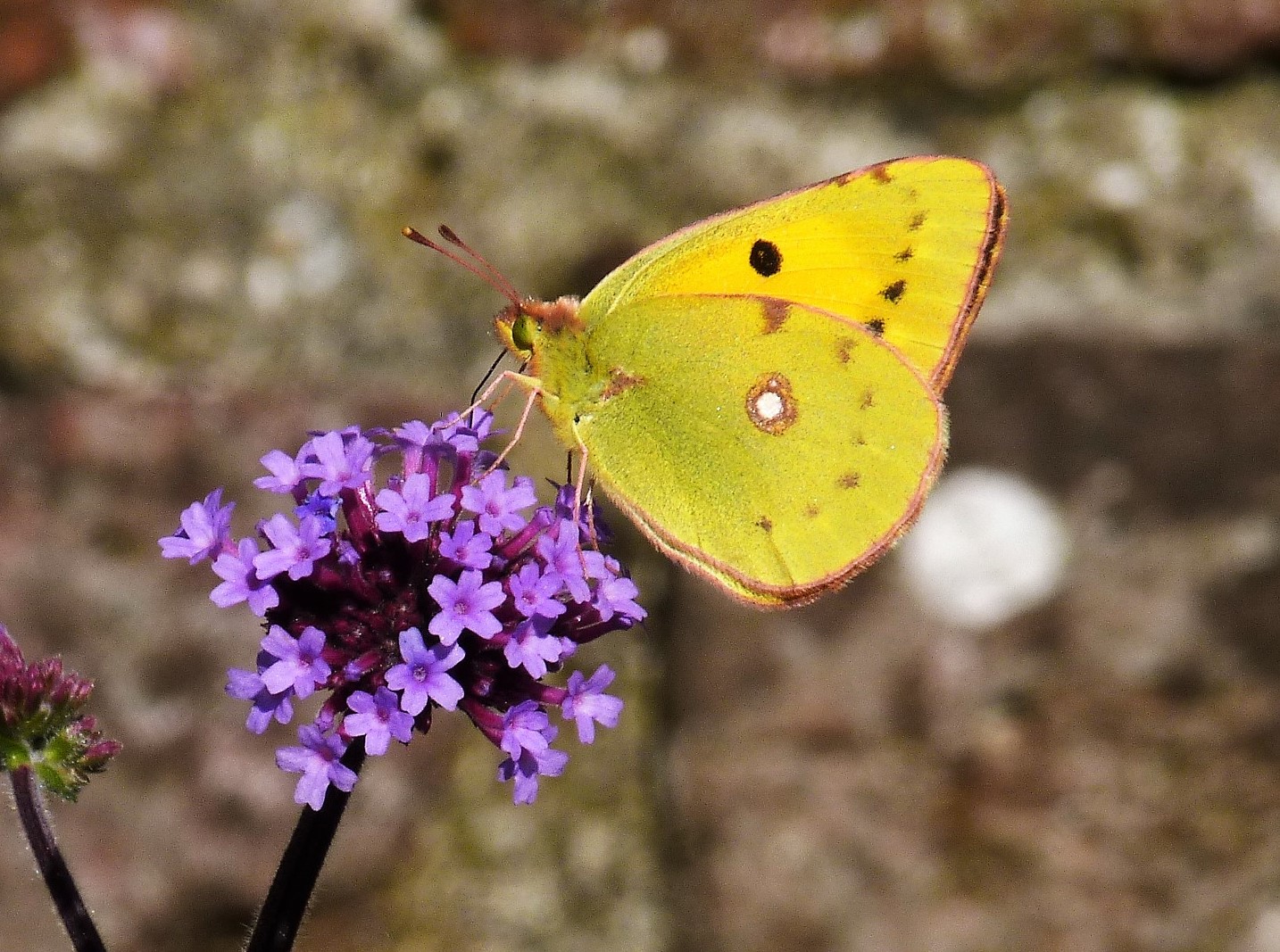
Clouded Yellow nectaring on Verbena Bonariensis – photo by Trevor Rapley
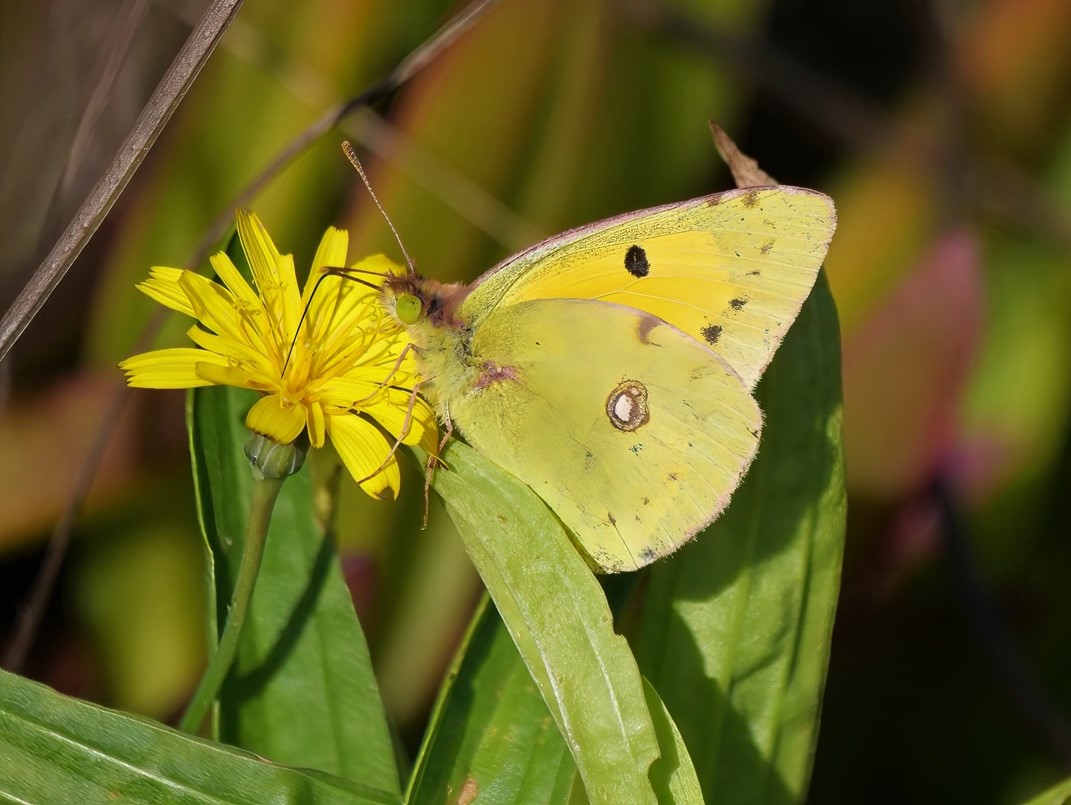
Nectaring on Autumn Hawkbit – photo by Nicholas Turner
.JPG)
Nectaring on Devilsbit Scabious – photo by Martin Kalaher
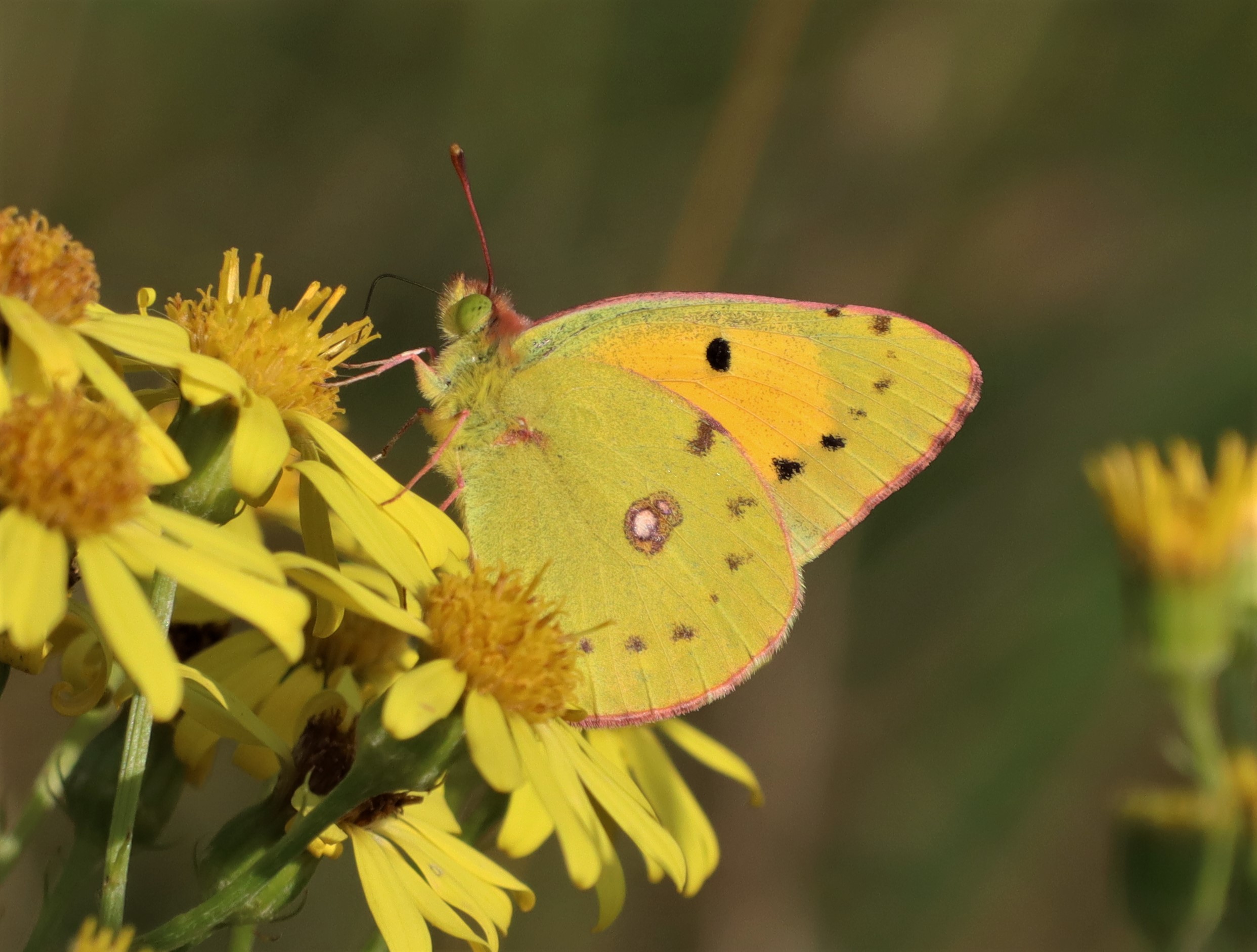
Nectaring on Ragwort – photo by Dave Brown
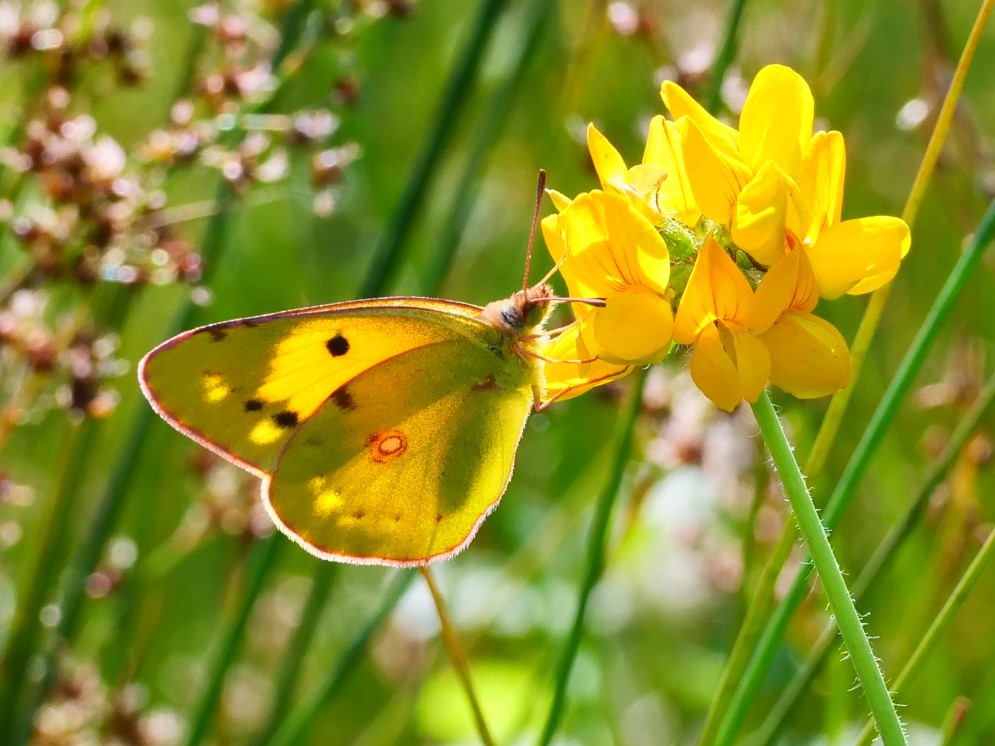
Nectaring on Greater Birdsfoot Trefoil - photo by Nicholas Turner
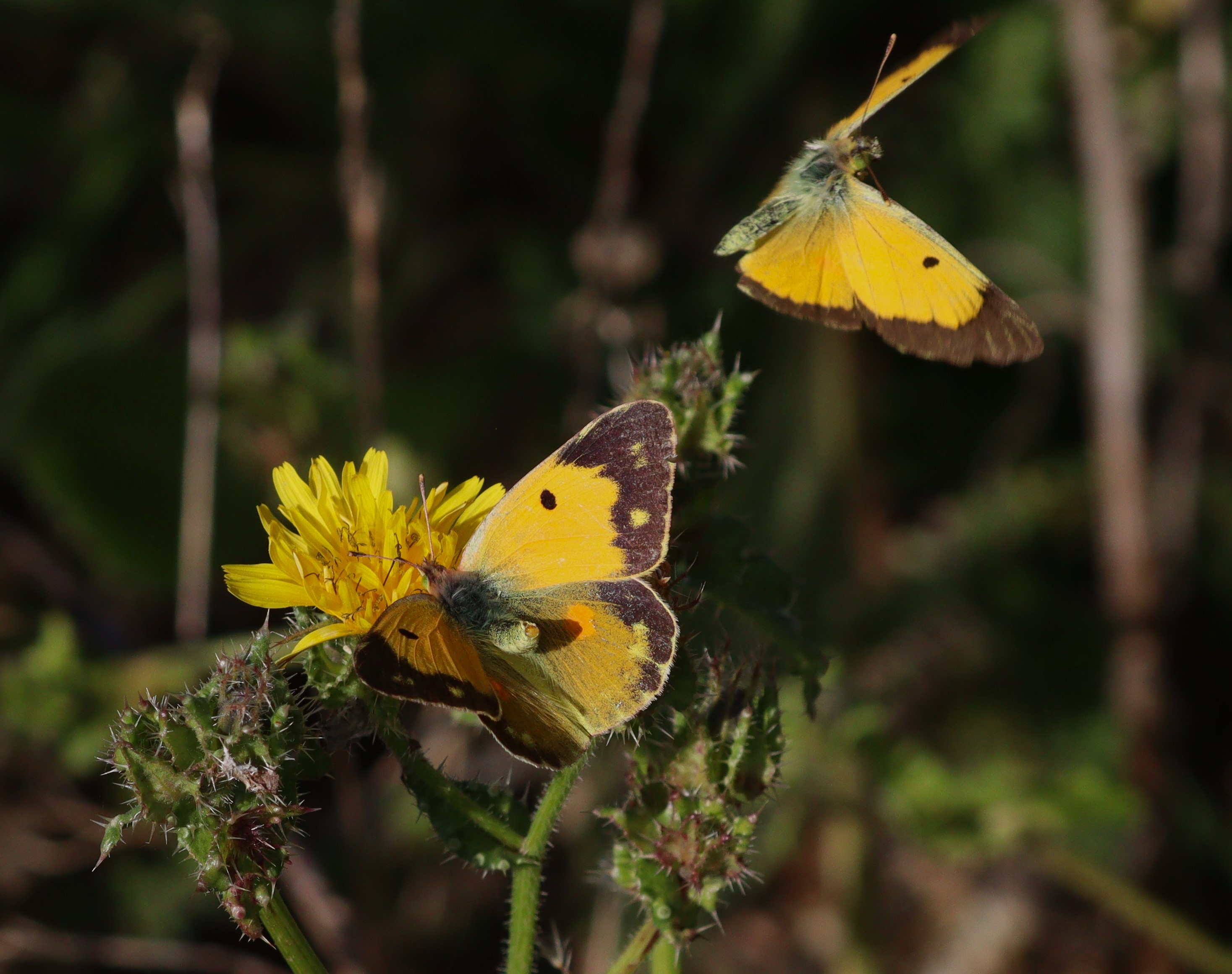
Showing open wings – photo by Dave Brown
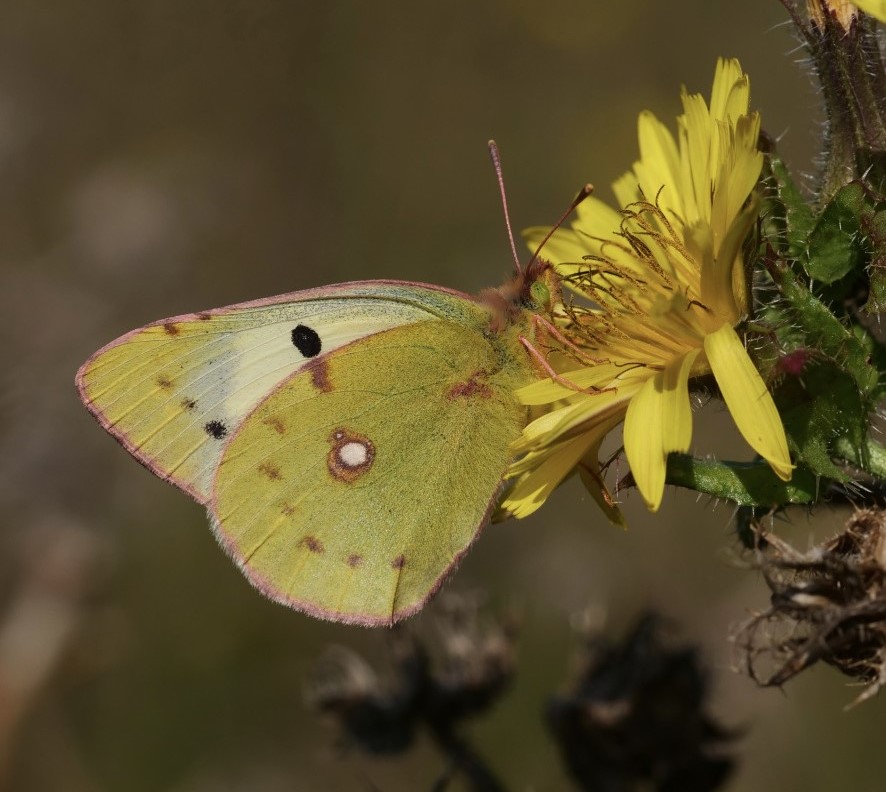
Helice female (note white patch on the forewing) - photo by David Cook
.JPG)
Getting ready for bed, in Euonymus bush - photo by Martin Kalaher
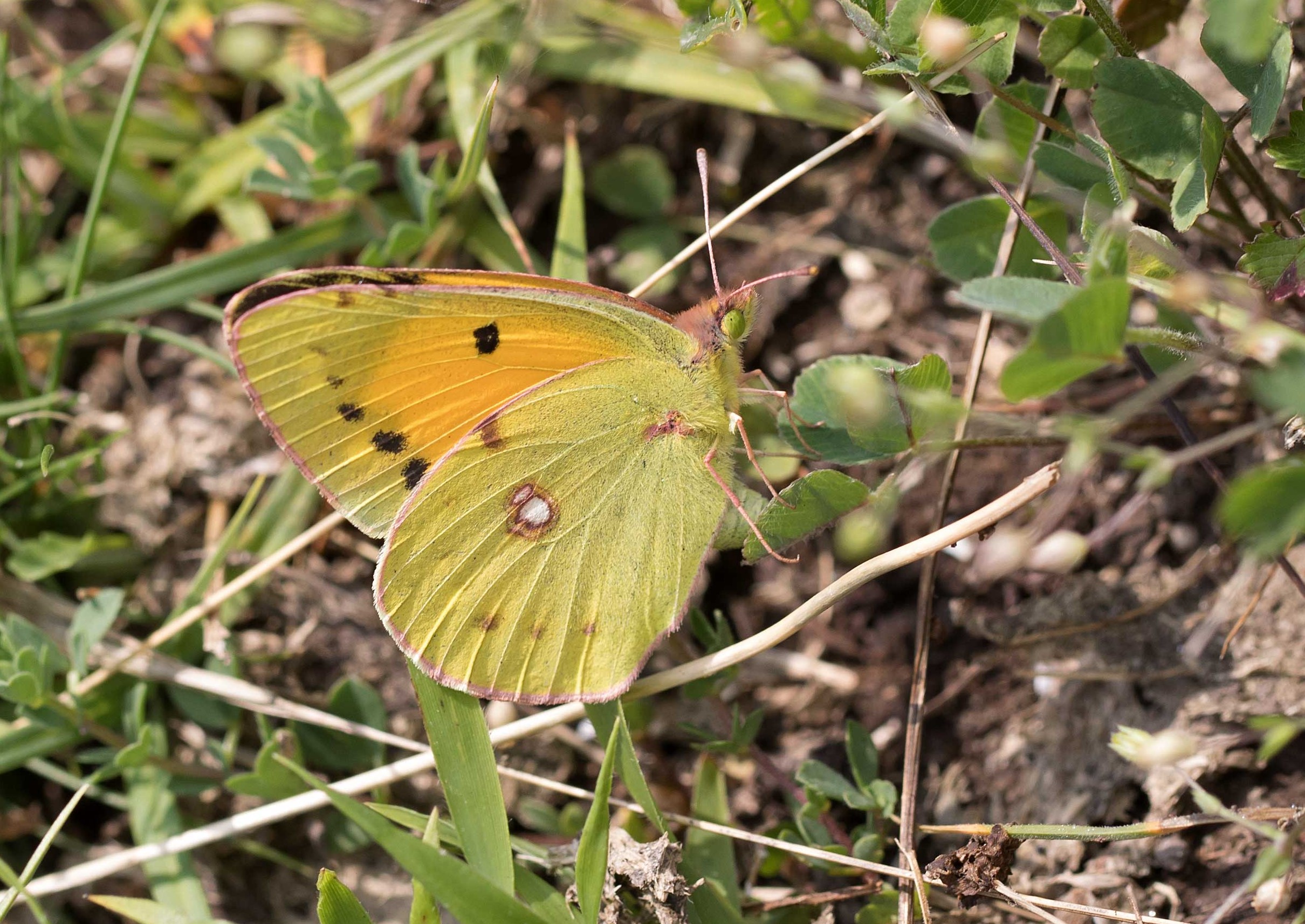
Egg-laying on Horseshoe Vetch - photo by David Potter
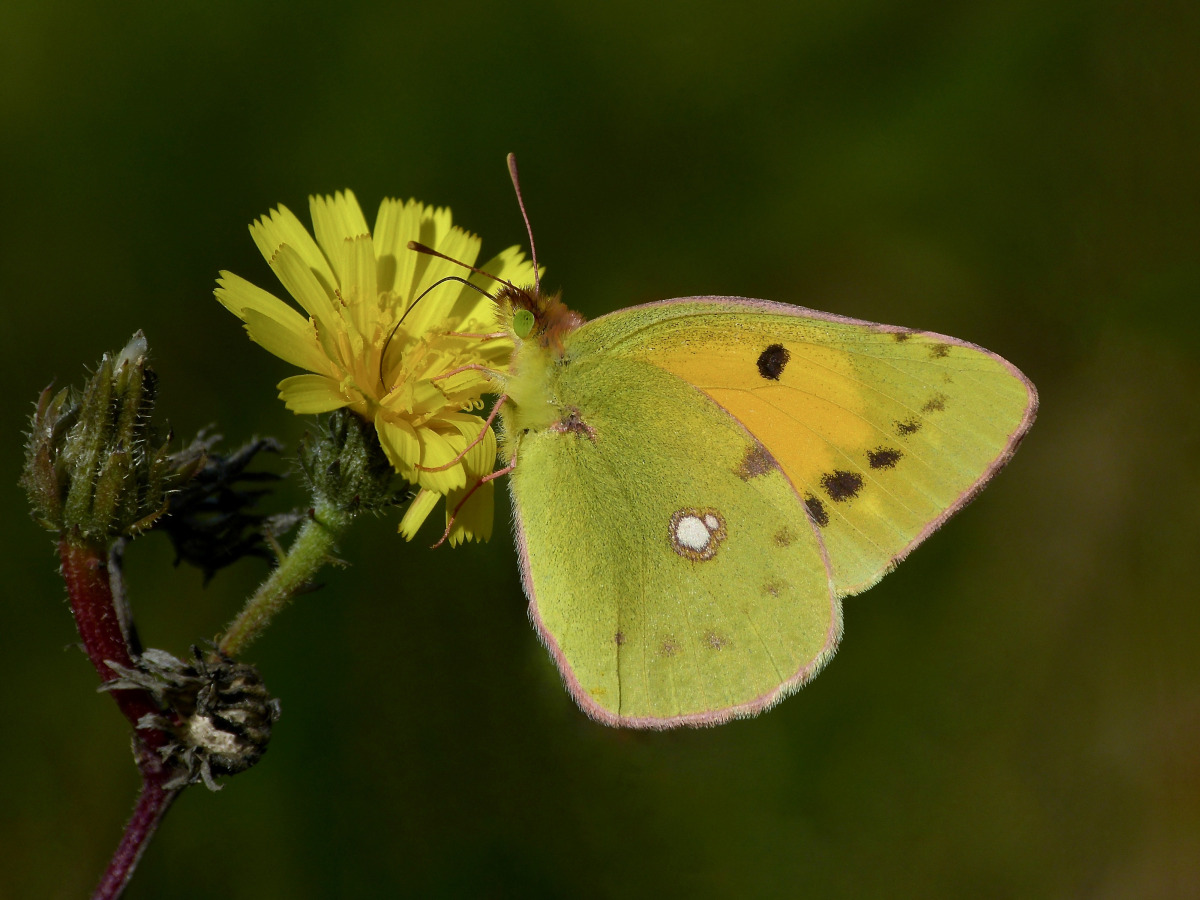
Clouded Yellow nectaring on Hawksbeard - photo by John Williams
JPG-19092020-3PETER_FARRANT601.jpg)
Clouded Yellow nectaring on Devilsbit Scabious - photo by Peter Farrant
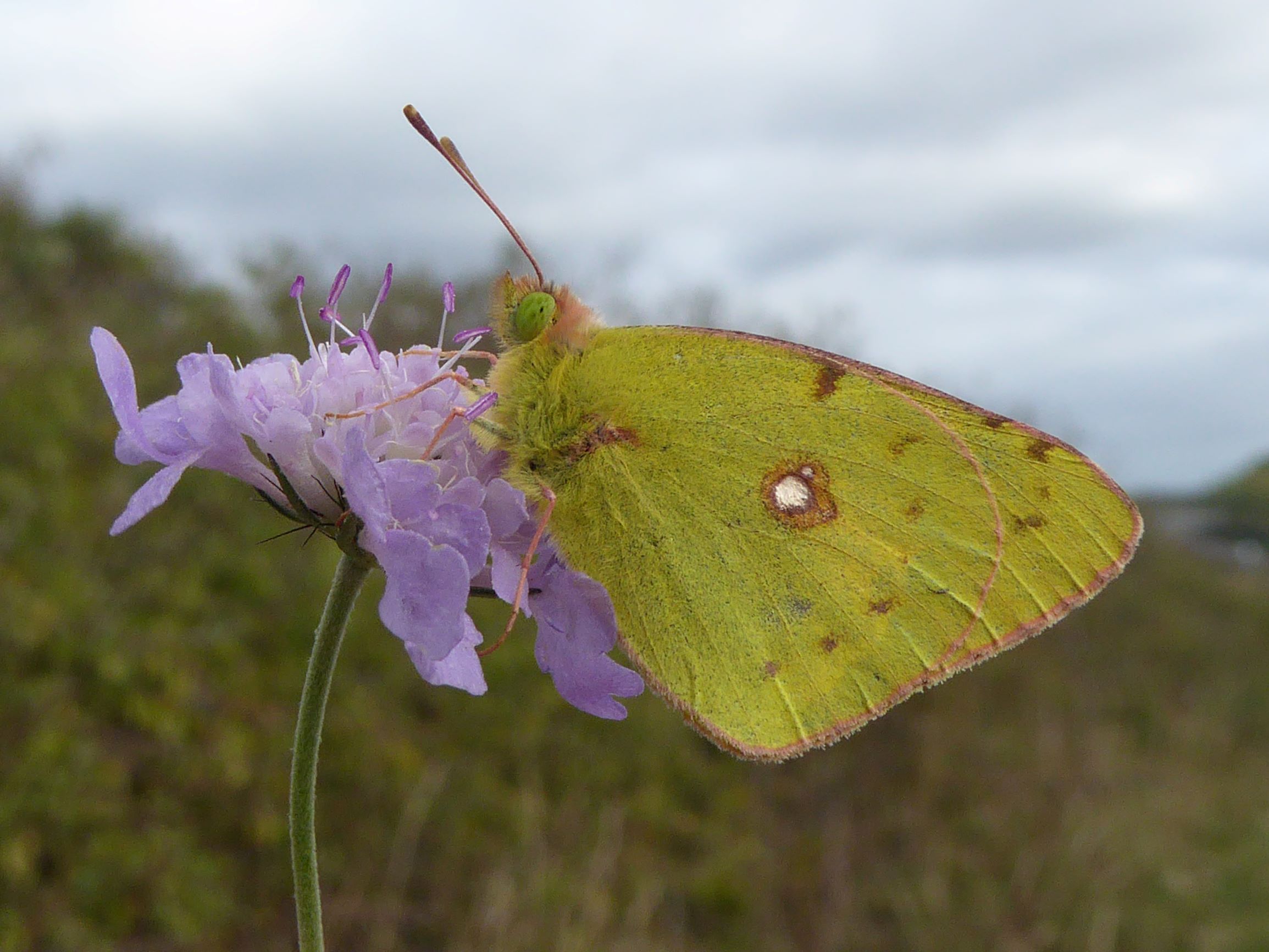
Clouded Yellow perched on Small Scabious - photo by Patrick Moore
Butterfly Conservation Clouded Yellow