Coenonympha pamphilus
This small orange/brown butterfly is widely-distributed throughout the county, but it is most numerous on the South Downs. It is usually found where fine grasses dominate on a short, sparse sward. Most colonies are relatively small, and number in the tens, but on some downland sites they can be seen in the hundreds. It has a complicated growth pattern with overlapping broods.
Climate change has had a profound effect on many of our native insects and Small Heath demonstrates this as well as any. One hundred years ago this was a single-brooded species with a small partial second brood. By the end of the 20th century, it was a double-brooded species, but in the past decade a third brood has become very regular, with October records for eight out of the past ten years.
Between 2006-2024 the “average first sighting” was April 27th (range, April 6th to May 16th). This first brood flies to late July, and then there is an overlap with the second brood which flies from late July to mid/late September. The third brood flies from mid-to-late September to early-to-mid October. The “average last sighting” was October 5th (range, September 22nd to October 27th).
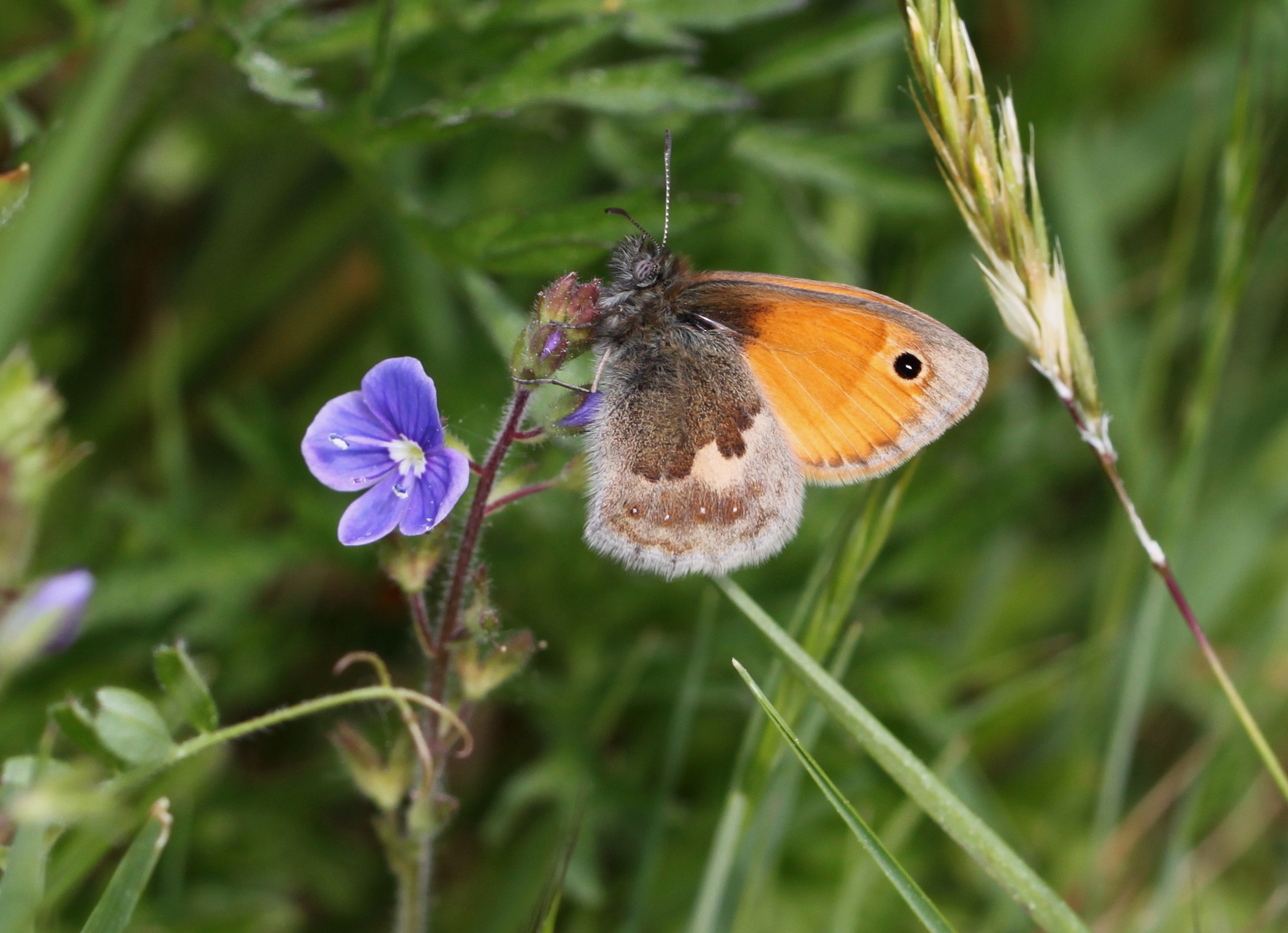
In the field it poses no particular difficulty with ID, as it is a very small orange/brown butterfly with a weak flight action and rarely flies very far before needing a rest! As soon as it lands it closes its wings and so we rarely have a decent view of the orange uppersides.
The eggs are laid directly on the blades of various fine-leaved grass species, including fescues (especially Sheep’s fescue), meadow grass and bent.
It’s a species that seems to have more than its fair share of rise and fall, being commonplace for a few years and then, quite inexplicably, reduced to very low numbers.
The largest colonies are found on the South Downs and include Chantry Hill at TQ0812, Cissbury Ring from TQ137076 to TQ145080 (via TQ139082), Heyshott Escarpment at SU899168, High and Over from TQ511014 to TQ488023 and Windover Hill from TQ532032 to TQ543033.
Small Heath nectaring on Germander Speedwell – photo by Martin Kalaher
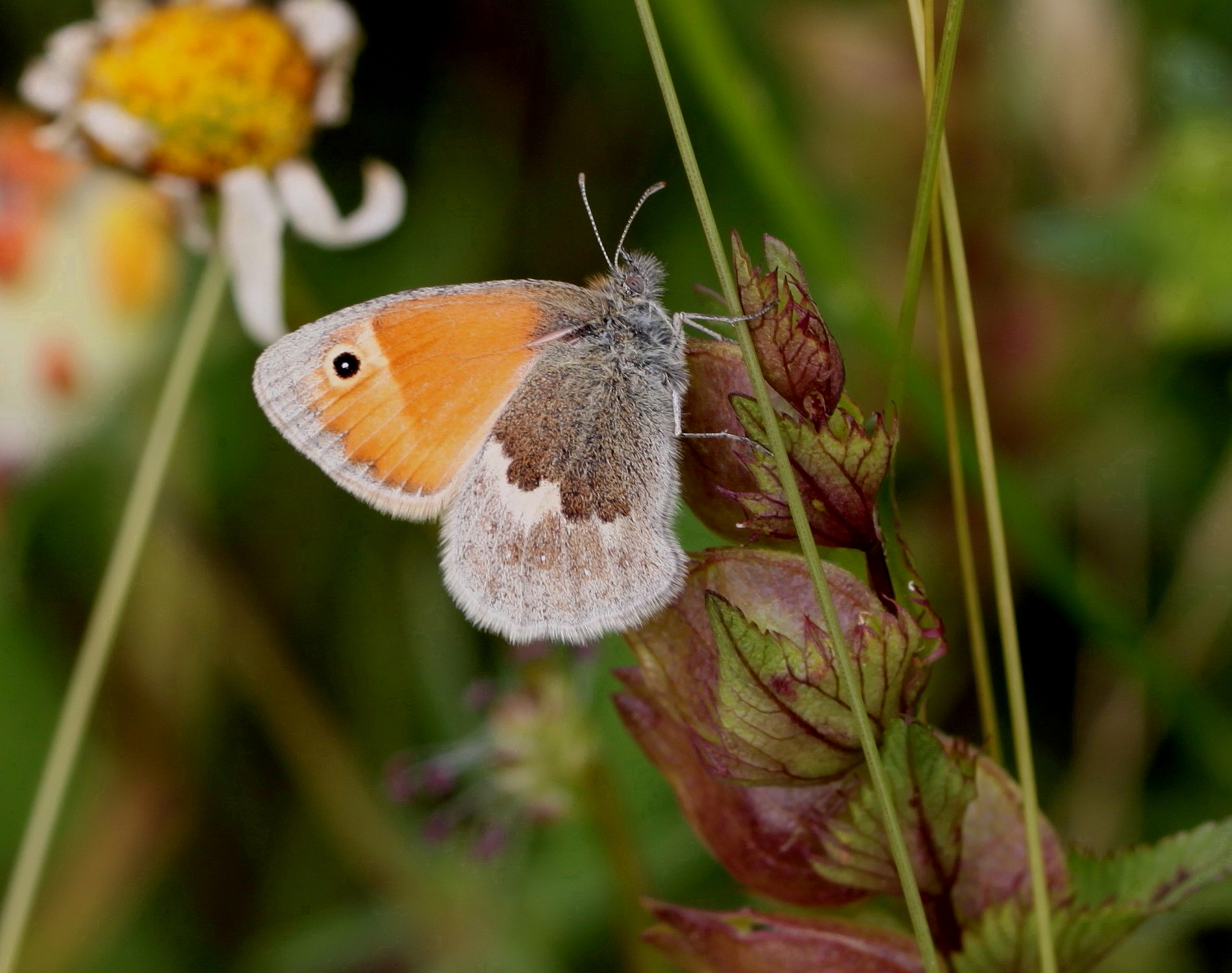
A male resting on the seed head of Yellow Rattle
.JPG)
Uppersides showing whilst this individual nectared on Marjoram
.JPG)
Perched on Yarrow
.JPG)
Nectaring on Devilsbit Scabious
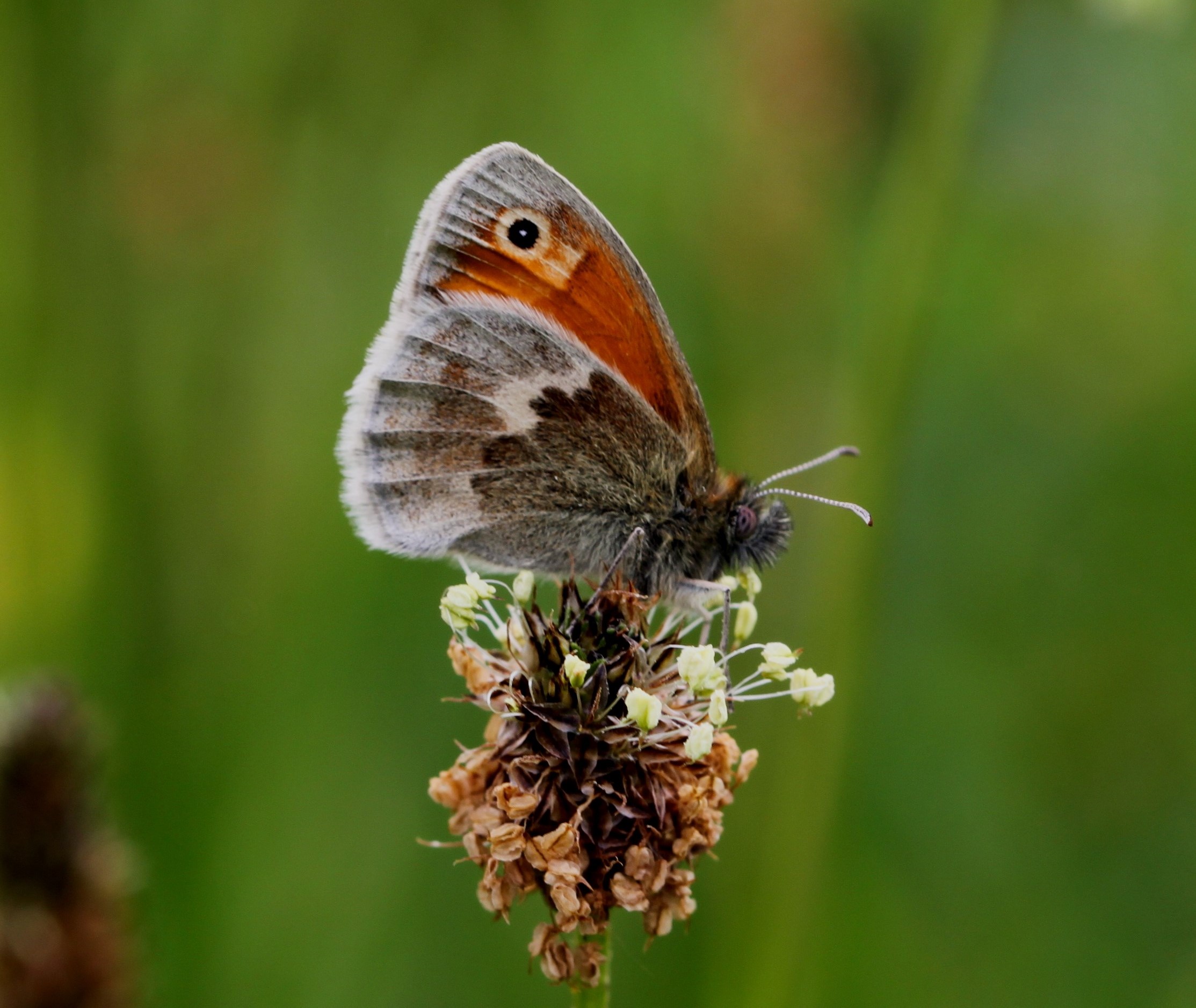
Perched on the flowerhead of Ribwort Plantain
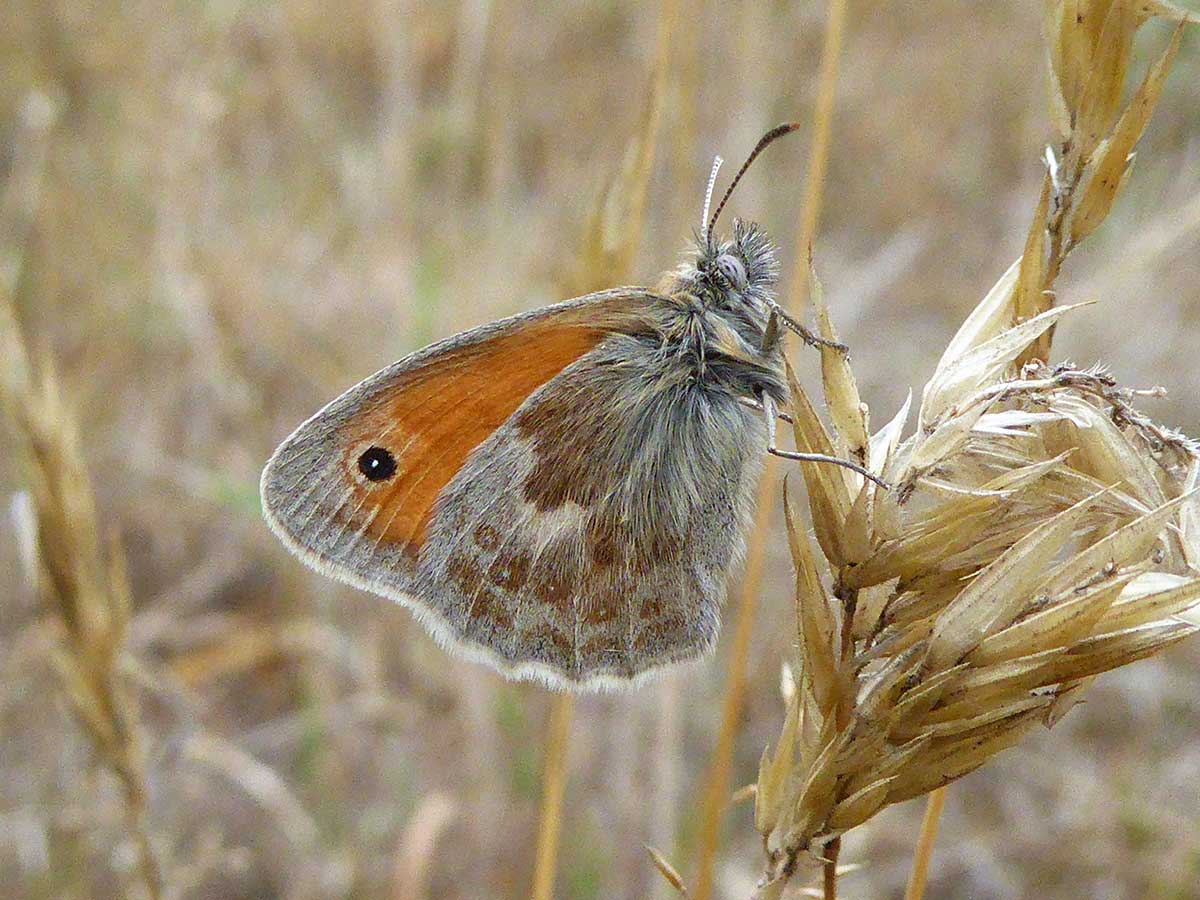
Resting on a grass head - photo by Patrick Moore
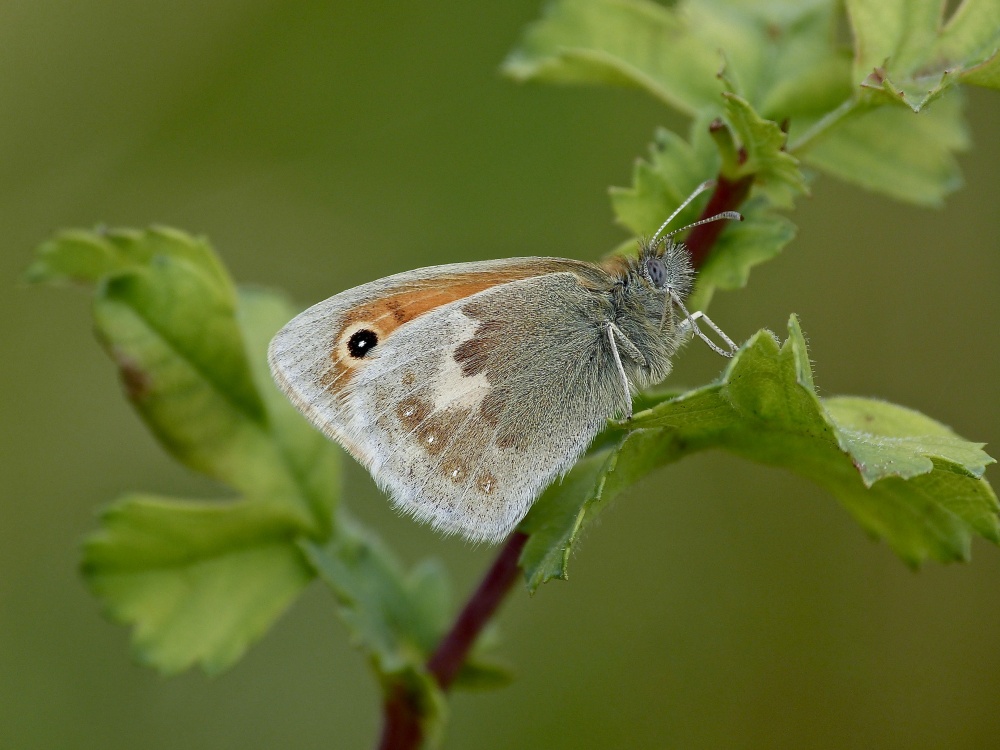
Small Heath at Mill Hill - photo by unknown photographer
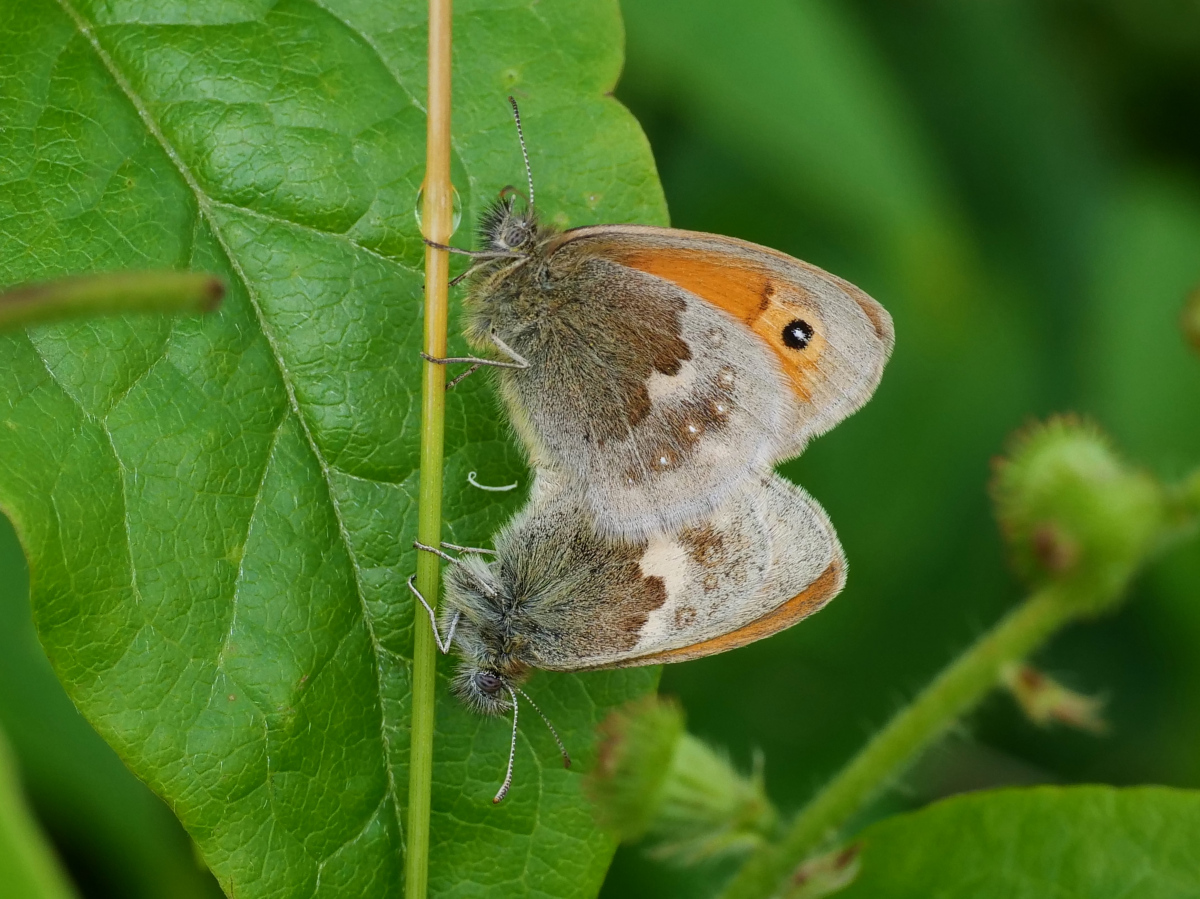
A mating pair - photo by Nicholas Turner
Butterfly Conservation Small Heath