CrXRZ-10052024-1Dave_Browne5442.jpg)
Pyrus malvae
Grizzled Skippers are tiny butterflies that can be easily overlooked or “dismissed” as a day-time flying moth. Nationally, this species is in decline, but in Sussex it is doing reasonably well and wherever there is good-quality chalk turf we are likely to find a small colony. Away from the South Downs it is an uncommon butterfly species, but none-the-less it can be found in a number of woods throughout both vice-Counties.
Given a reasonable view it should not be difficult to identify. The upperside is a charcoal background, on which there are well-defined scattered blocks of white, and on the margins of the wings there is a very bold black-and-white fringe.
Between 2006-2024 the “average first sighting” was April 10th with a range of March 24th and April 30th. The spring emergence is very weather-dependent, and this wide range of dates reflects the stark differences between a warm spring and a cold spring, when the emergence of a spring species can be two weeks earlier than an average date, or two weeks later.
Territorial males bask prominently on bare soil or very short vegetation and dog-fights between neighbouring males are common. In truth, this tiny pugnacious butterfly is willing to do battle with just about any other butterfly that dares to fly over its patch. They are a joy to watch.
The principal larval foodplant on the South Downs is probably Wild Strawberry, but Raspberry, Bramble, Tormentil, Creeping Cinquefoil, Salad Burnet and Agrimony are also used.
The spring emergence of this species is 3-4 weeks earlier compared to most of the 20th century. An early start to the breeding season “allows time” for a small second generation, which historically occurred once every twenty years, or so, but now occurs every 2-3 years. The numbers involved are very small, but it is does mean that some very late summer records occur, such as 25/07/2010, 16/07/2013 and 20/07/2022.
If you manage to see more than half-a-dozen individuals on a 3-4 hour butterfly excursion you are doing well. Most colonies are very small. To maximise your chances of seeing this exquisite little butterfly, try visiting downland sites such as Chantry Hill at TQ0812, Cissbury Ring from TQ137076 to TQ141078 (via TQ139082), Levin Down at SU8813, Mill Hill at TQ211071, Well Bottom & Cow Wish Bottom at TQ4505 and TQ4504. If at first you don’t succeed, then look for flowering Wild Strawberry (which is very recognisable) and carry on searching. Find the larval foodplant, find the butterfly!
Grizzled Skipper with open wings – photo by Dave Browne
.JPG)
Nectaring on Birdsfoot Trefoil – photo by Martin Kalaher
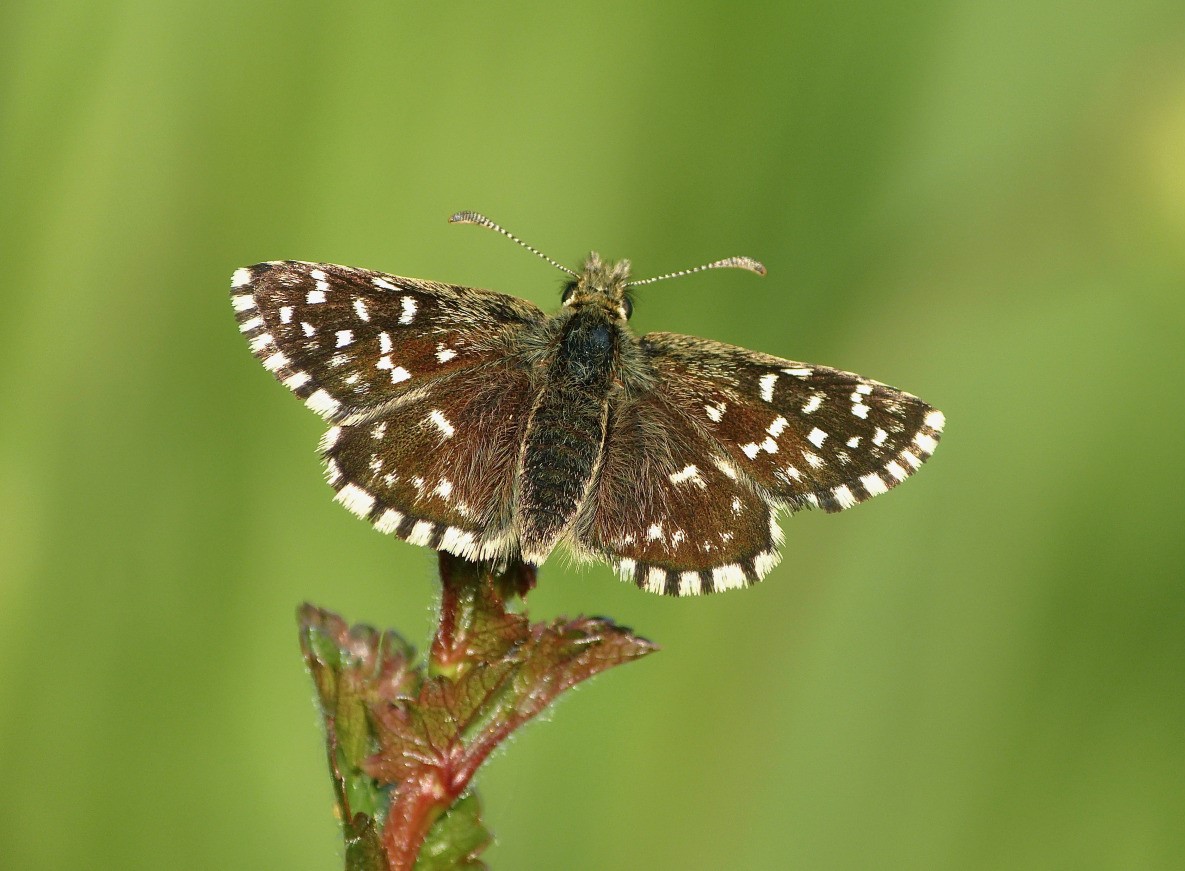
With open wings – photo by John Williams
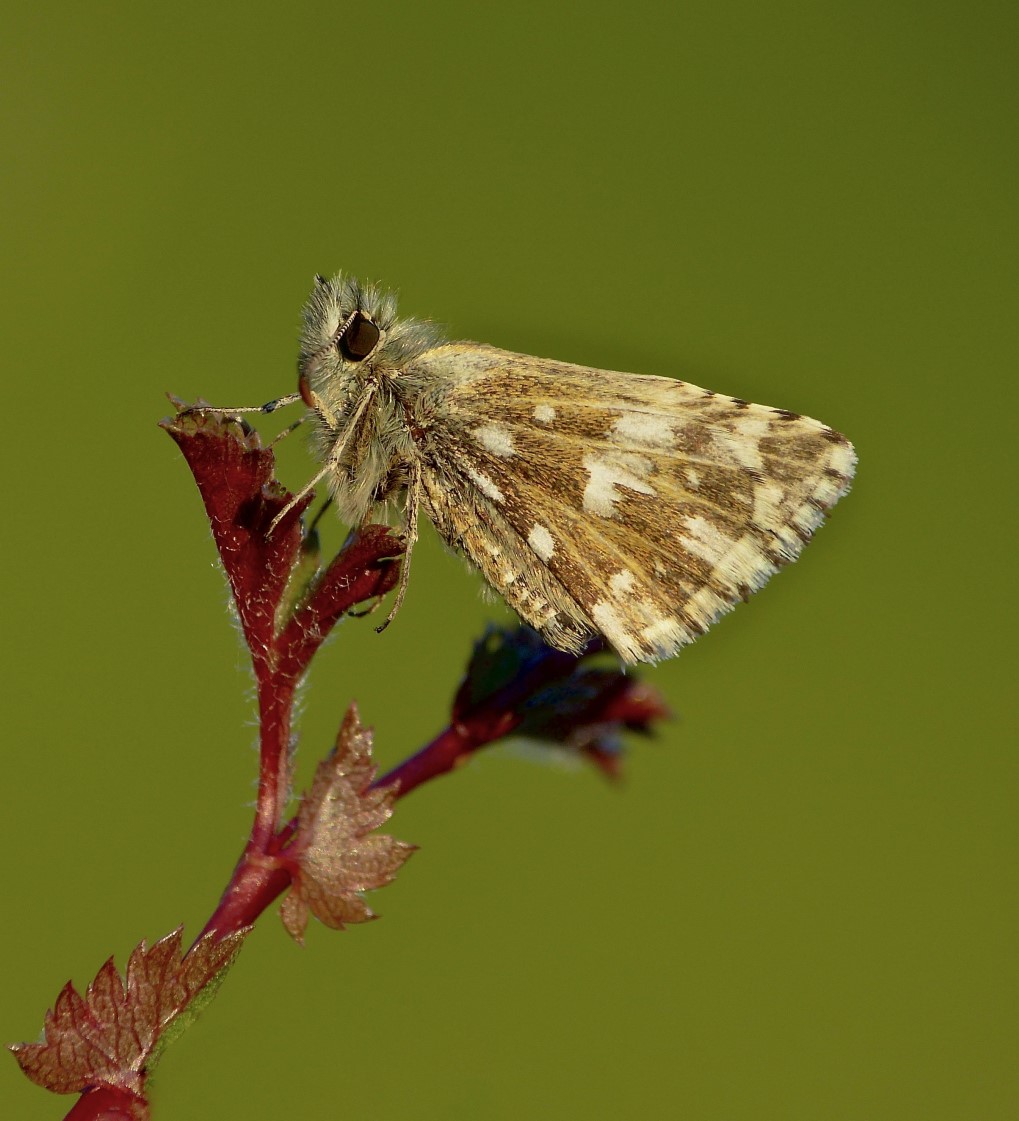
At roost – photo by John Williams
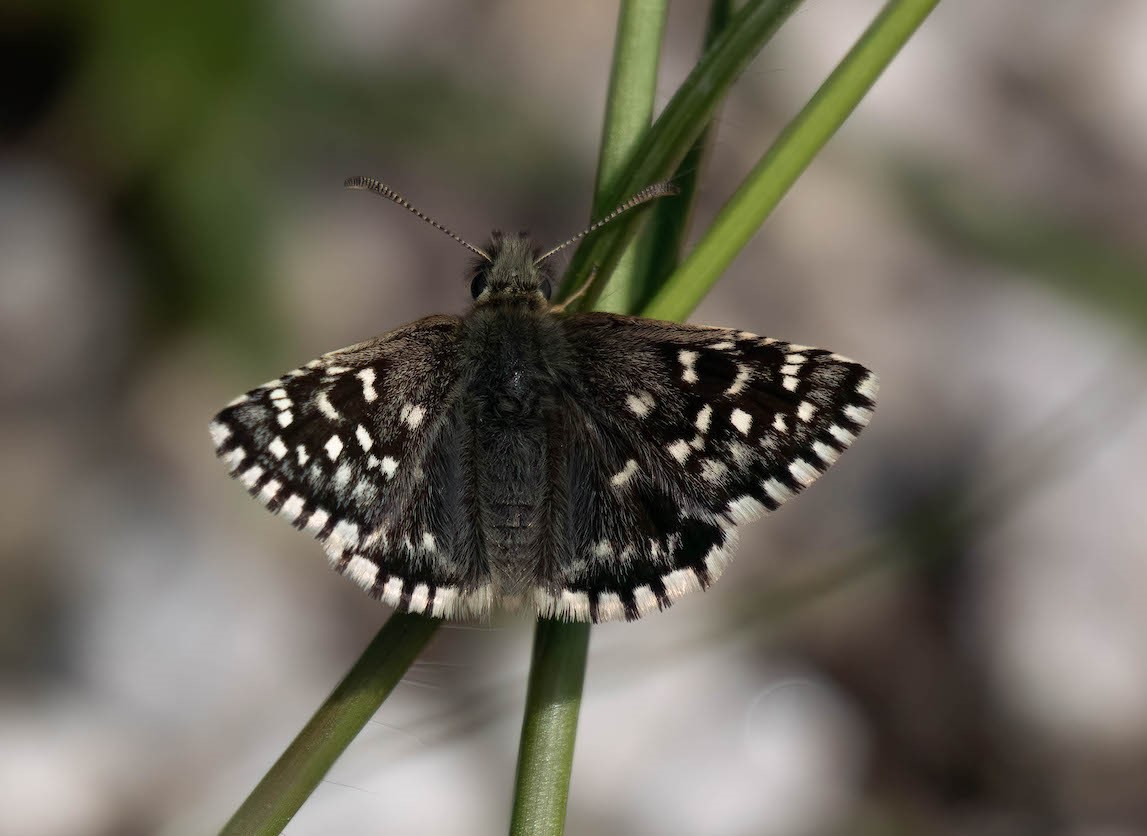
A very dark individual - photo by Graham Hubbard
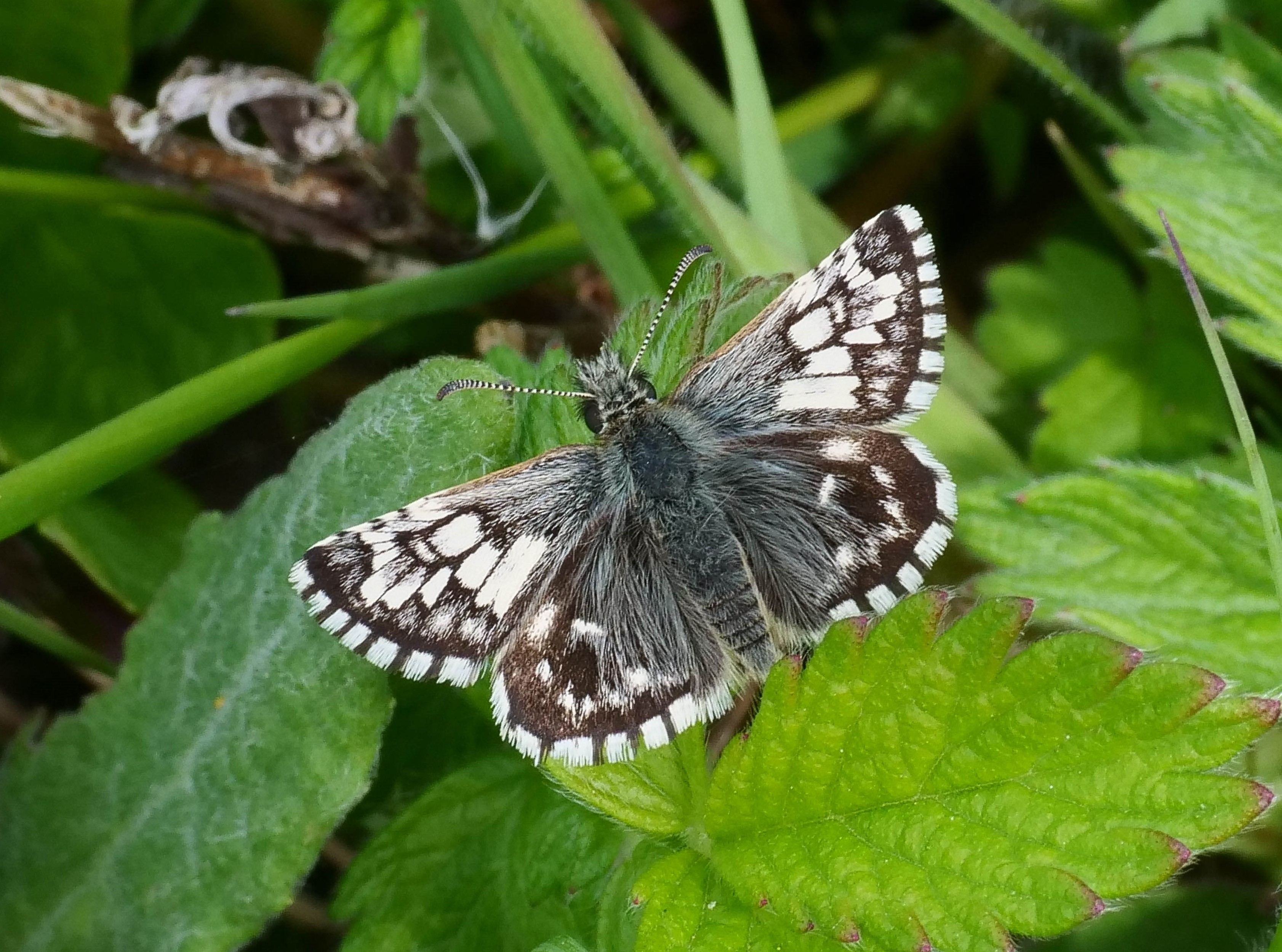
A very pale individual (ab. taras) – photo by Nicholas Turner
CrXRZ-09052024-3Dave_Browne5435.jpg)
With open wings - photo by Dave Browne
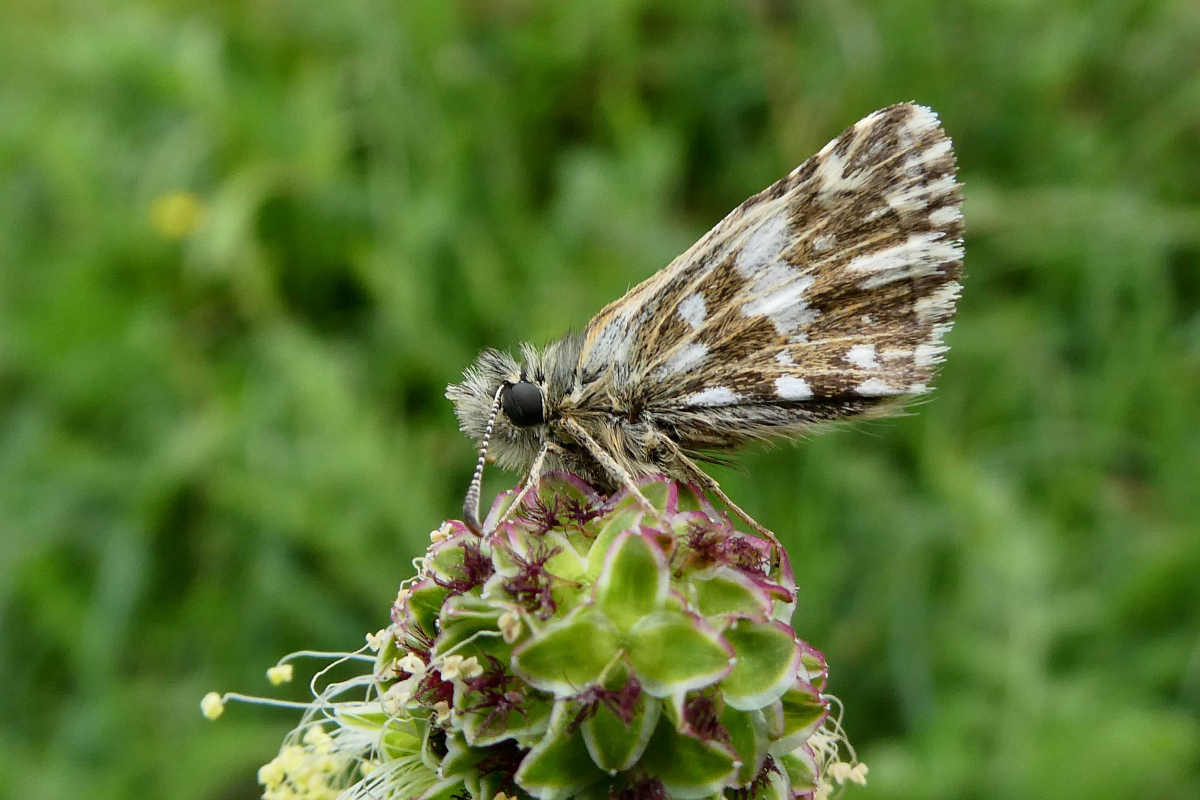
With closed wings- photo by Peter Farrant
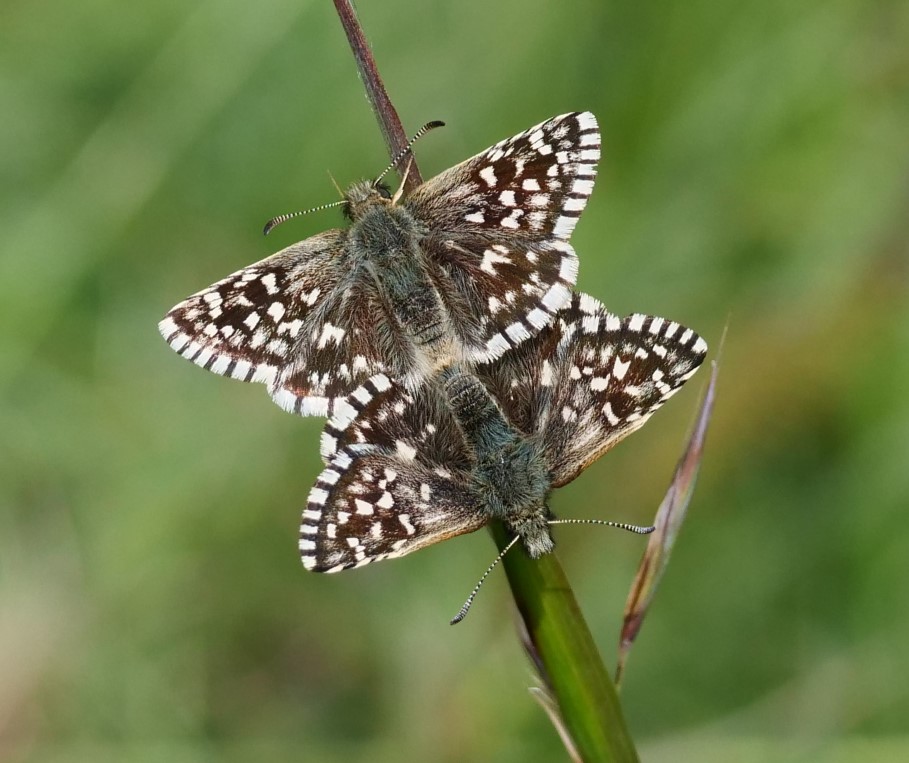
Mating pair - photo by Nicholas Turner
Butterfly Conservation Grizzled Skipper