Hamearis lucina
In 2003, only eight Duke of Burgundys were recorded in Sussex, and this species was rapidly heading for local extinction. A major conservation initiative was launched by Neil Hulme, and with the help of a large band of volunteers, and the sympathetic support of many landowners, this precipitous decline was reversed. In recent years, the county total has run into the high hundreds and this species is now doing very well. All the breeding colonies are found on downland and mostly in open habitat, but there are a few small colonies in a more woodland setting.
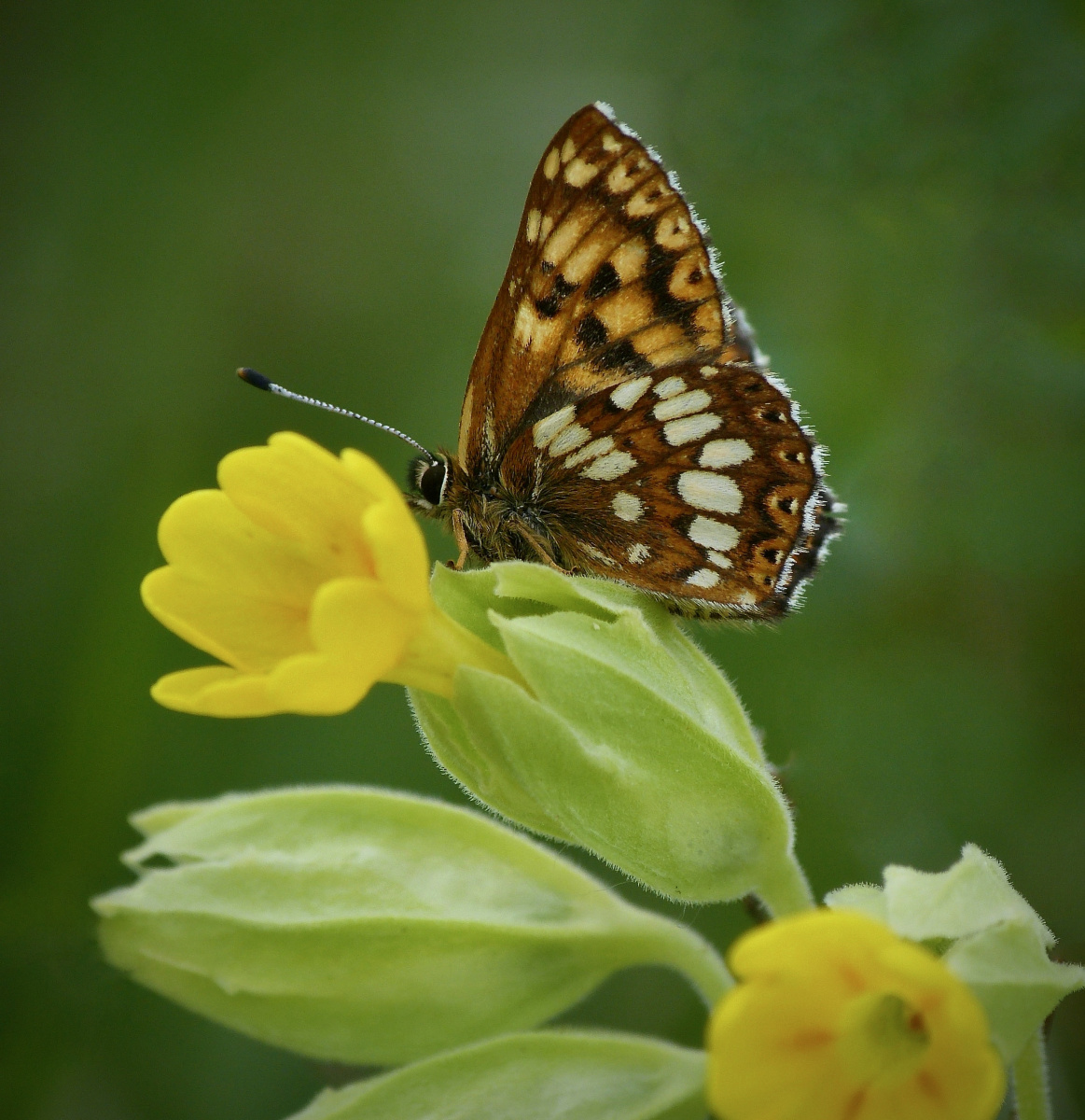
Given a decent view it is a relatively straightforward ID. The uppersides of the male is a 'burnt orange' and this is overlaid with a complex pattern of dark brown bars and stripes. The female is similar but is noticeably larger and the background colour is a brighter orange. The undersides of both sexes are similar and made up of a lovely mixture of browns and yellow ochre, with two parallel rows of pearly-white dots on the hindwing.
When it comes to sexing a Duke of Burgundy my own rule-of-thumb works very well (or it does for me). Examine the outer half of the forewing. For a male the amount of orange and brown is about equal, 50% orange and 50% brown. For a female the ratio is different, 70% bright orange and 30% brown.
Between 2006-2024 the “average first sighting” was April 24th (range April 16th to May 7th). There is just one brood, and the flight period is only a few short weeks. The “average last sighting” was May 31st, and the very last record was June 26th, 2013.
The eggs are laid on Primula species. Our Sussex Duke of Burgundy are found on downland and therefore Cowslip is mostly used. The colonies that are found in a more woodland setting also use Primrose. Neil Hulme has recorded egg-laying on False Oxlip, which is hybrid between Cowslip and Primrose.
There are now many locations in Sussex to see Duke of Burgundy, and they include Kithurst Meadow at TQ070125, Chantry Hill at TQ0812, Fairmile Bottom LNR at SU986091, Harting Downs at SU796185 and Heyshott Escarpment at SU899168.
Duke of Burgundy perched on Cowslip – photo by John Williams
CrXRZ-10052024-2Dave_Browne5442.jpg)
Male at rest – photo by Dave Browne

Female at rest – photo by Paul Day

Male with open wings – photo by Dave Brown
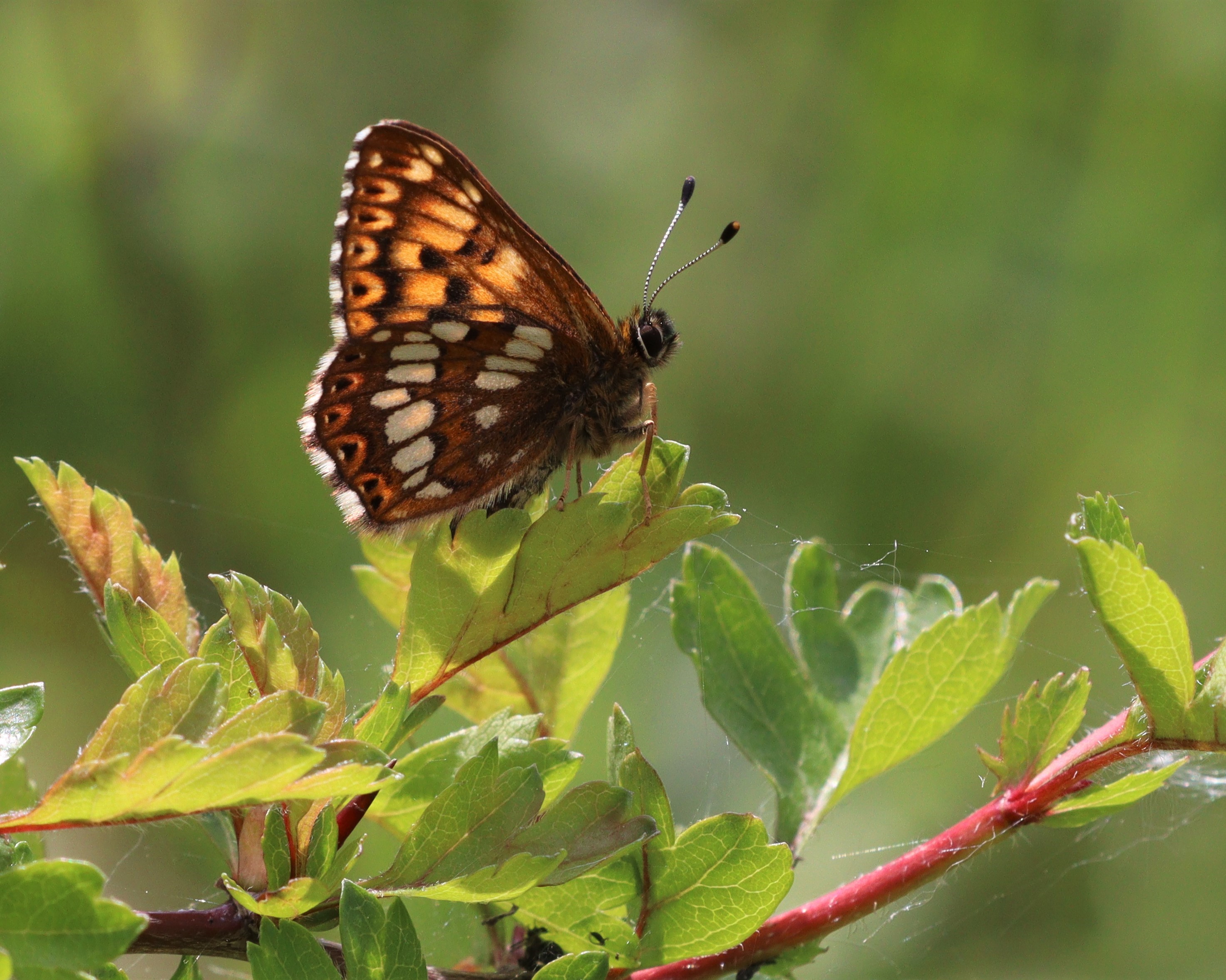
Male undersides – photo by Dave Brown
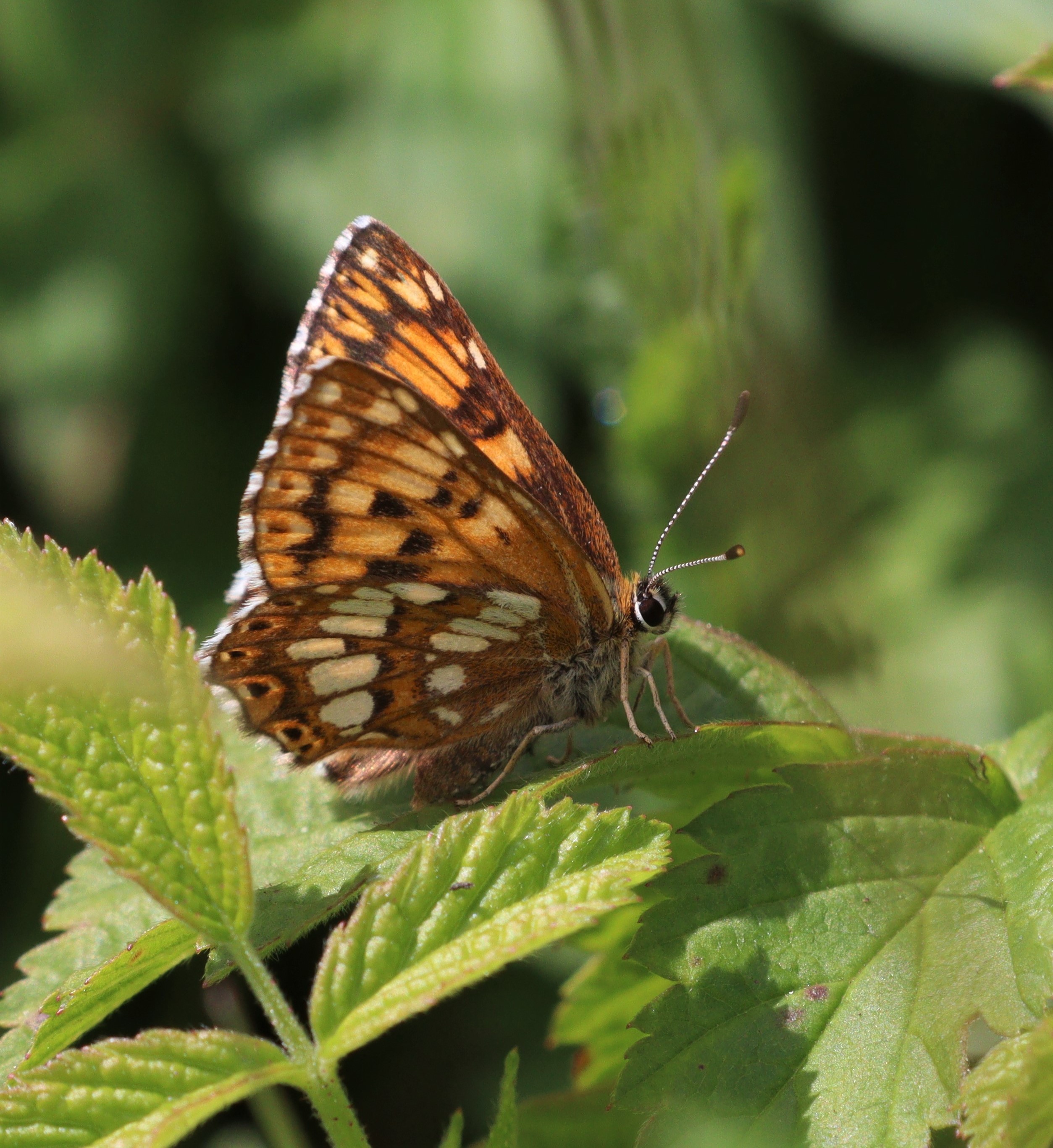
Female undersides – photo by Dave Brown
Butterfly Conservation Duke of Burgundy