.JPG)
Erynnis tages
This species can be found in a wide variety of habitats, but all the larger colonies in Sussex are located on the South Downs. Away from downland Dingy Skippers are well-distributed throughout the county forming small colonies in habitats such as quarries, woodland rides, and any marginal patch of land where Birdsfoot Trefoil thrives.
Dingy Skipper has a complex, intricate wing pattern with an attractive variety of browns and greys. With its big head, big body, and relatively small wings, it is more “moth-like” than any other UK butterfly species. A low-flying female looking for suitable larval foodplants can easily be “dismissed” as a day-time flying moth. One very good ID feature for this species is the row of off-white dots that are located inside the margins of all four wings. Even in very faded individuals this feature is not difficult to see.
Between 2006-2014 the “average first sighting” was April 16th with a range of April 6th and May 6th. Peak activity is usually the second half of May, with a few stragglers surviving until early July. Dingy Skippers and Grizzled Skippers often share the same downland slope, with Dingy Skippers emerging the second of these two spread-wing skippers, by around one week.
The principal larval food plants are Horseshoe Vetch on chalk, and Birdsfoot Trefoil, elsewhere. These native plants thrive in a fairly short sward and lightly-grazed chalk turf provides the ideal habitat.
There is a regular second brood from mid-July, onwards, but the numbers are generally very small, and for most years the records for this website do not reach double figures. For 2006-2024 the “average last sighting” was August 12th (very latest date recorded was 26/08/2006).
This species is well-distributed throughout the county, but the largest colonies are found on downland sites such as Chantry Hill at TQ085123, Castle Hill at TQ368068, Heyshott Escarpment at SU899168, Mill Hill at TQ211071 and Well Bottom at TQ 4505.
Female Dingy Skipper nectaring on a garden Geranium – photo by Martin Kalaher

Territorial male – photo by David Cook

Male nectaring on Ground Ivy – photo by David Cook

Male perched on flowerhead – photo by David Cook
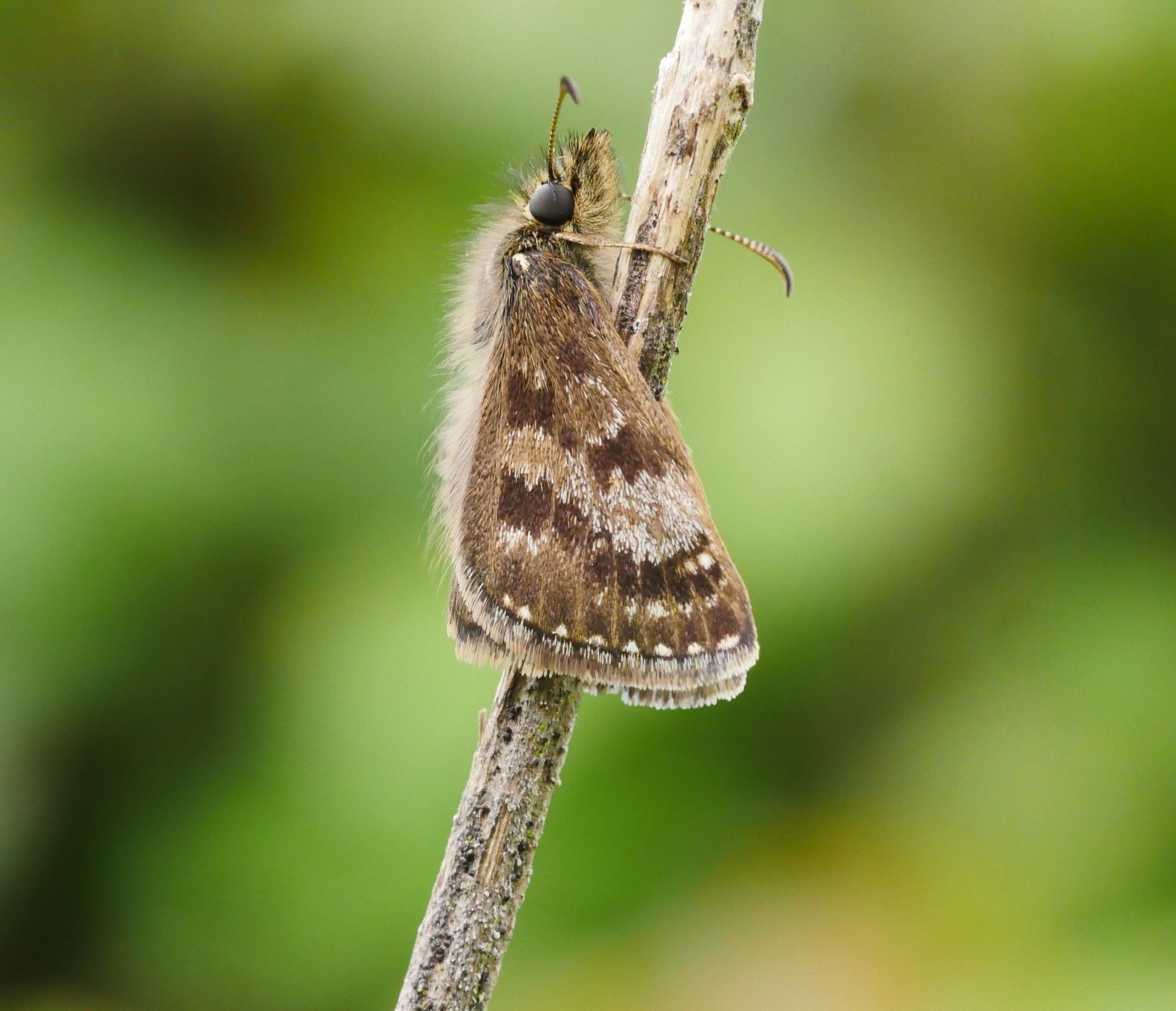
Roosting Dingy Skipper – photo by David Cook
.JPG)
Female Dingy Skipper nectaring on Birdsfoot Trefoil – photo by Martin Kalaher
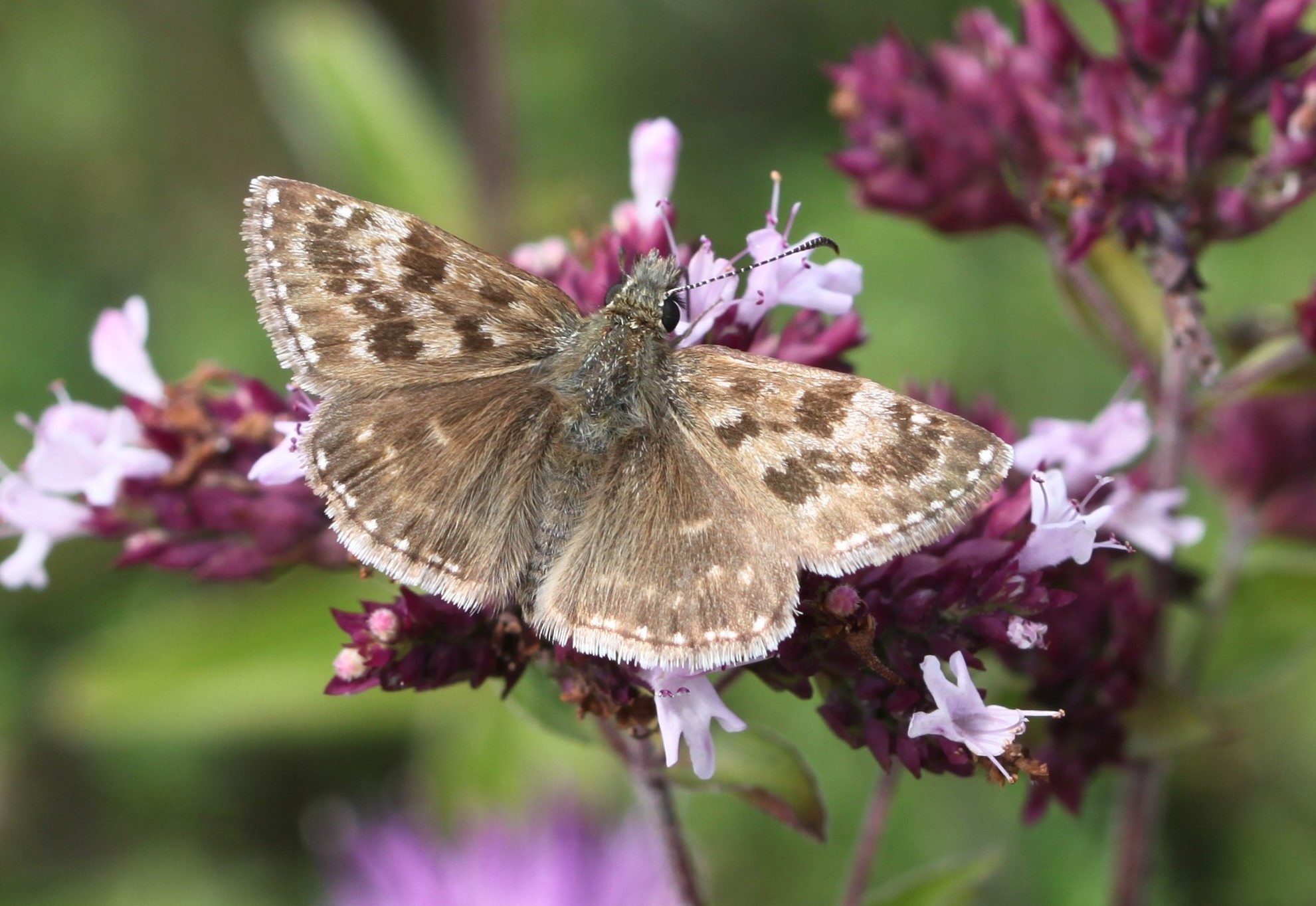
Second brood Dingy Skipper feeding on Marjoram - photo by Martin Kalaher
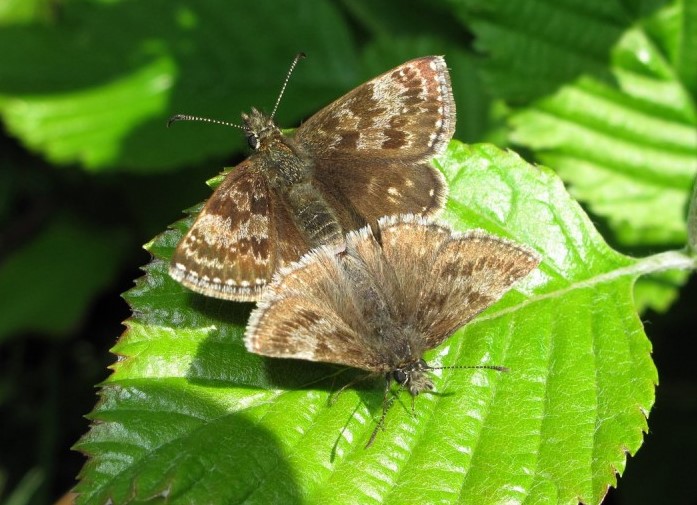
Mating pair of Dingy Skippers - Sussex BC website photo
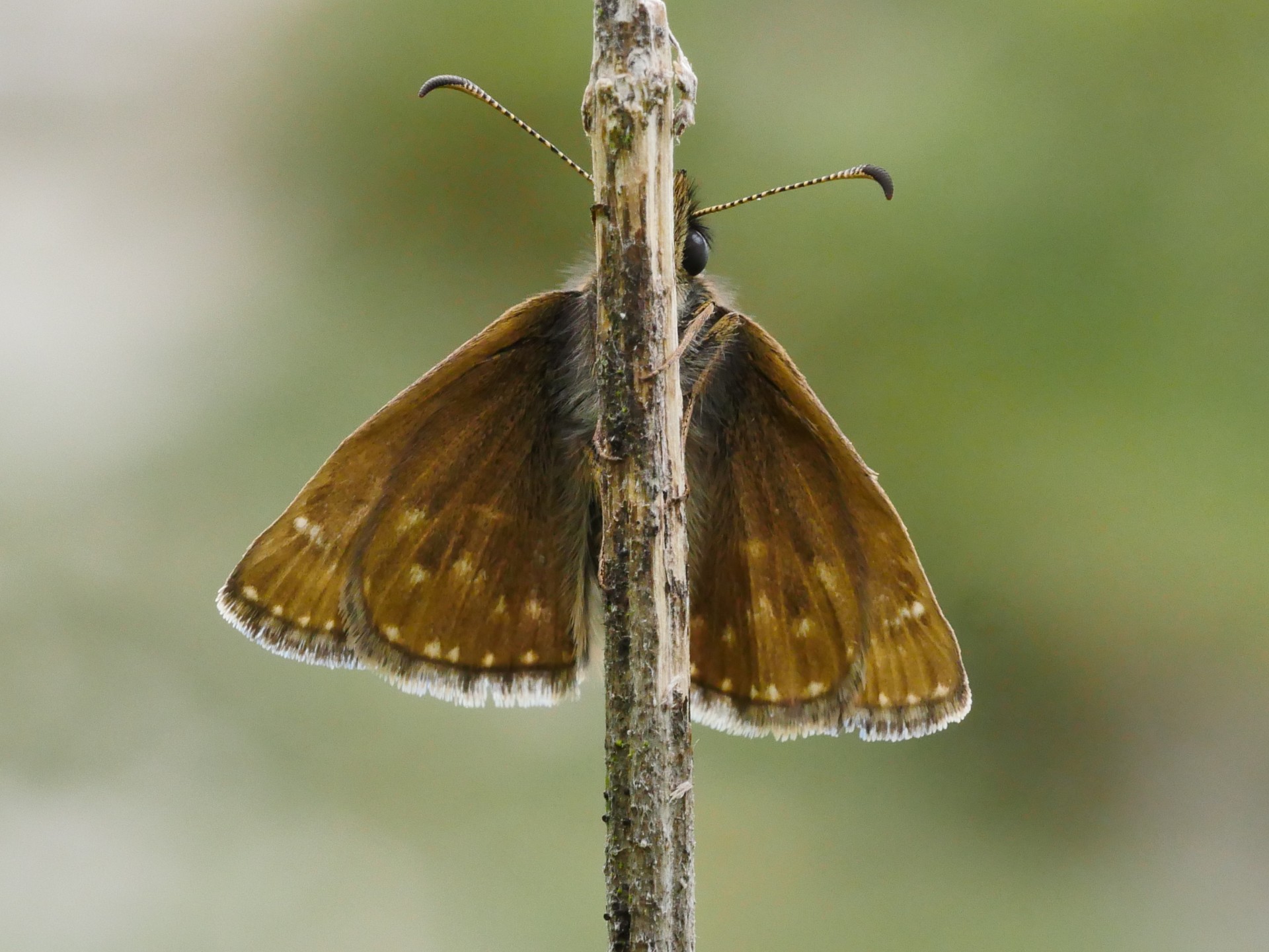
The undersides of a Dingy Skipper - Sussex BC website photo
Butterfly Conservation Dingy Skipper