.JPG)
Speyeria aglaja
This beautiful fritillary is strongly associated with flower-rich, open habitats. In Sussex, the largest of their self-contained colonies may be found on downland, especially between the River Arun and Eastbourne. This species is not confined to chalk, and there are a few small colonies away from the South Downs where it may be found in the glades and wide, sunny rides of woodland, sometimes flying alongside Silver-washed Fritillaries.
The background colour of the male DGF is bright orange-brown with a lovely scattering of black dots, blocks, and crescents. The female is readily distinguished from the male as the background colour is much duller and the margins noticeably paler. The underside, hindwings of both sexes are suffused with a bold olive-green with scattered large white spots and within this county cannot be confused with any other fritillary. Elsewhere, the High Brown Fritillary needs to be considered.
This species is single-brooded and for 2006-2024 the “average first sighting” was June 12th (range, May 30th to June 21st). Compared to the early 20th century the breeding cycle has moved forward three weeks, and just as DGFs now appear earlier, they also disappear earlier in late summer, and nowadays we struggle to see one much beyond the middle of August.
This species lays its eggs on violets, which generally means Hairy Violet on downland and Common Dog-violet in woodland.
It is all too easy to extol the past and lament the present, but we must not forget some of the great conservation success stories of recent years. In July 2011, a Dark Green Fritillary was seen egg-laying on Chantry Hill, and as this was a new species for this location, it caused quite a stir. Just five years later there was a peak daily count of 200! What a wonderful success story, and all because a few cattle had been re-introduced a couple of years earlier, and that had allowed the violets to flourish. Conservation strategies do not always have to be that complicated.
There are many large colonies on the South Downs and good sites to visit are, Birling Gap to Beachy Head at TV562957, Chantry Hill at TQ085123, Cissbury Ring from TQ137076 to TQ145080 (via TQ139082), Friston Forest and Lullington Heath NNR from TV527993 to TV544986 and Windover Hill from TQ532032 to TQ543033.
Female Dark Green Fritillary – photo by Martin Kalaher
.JPG)
Male nectaring on Field Scabious
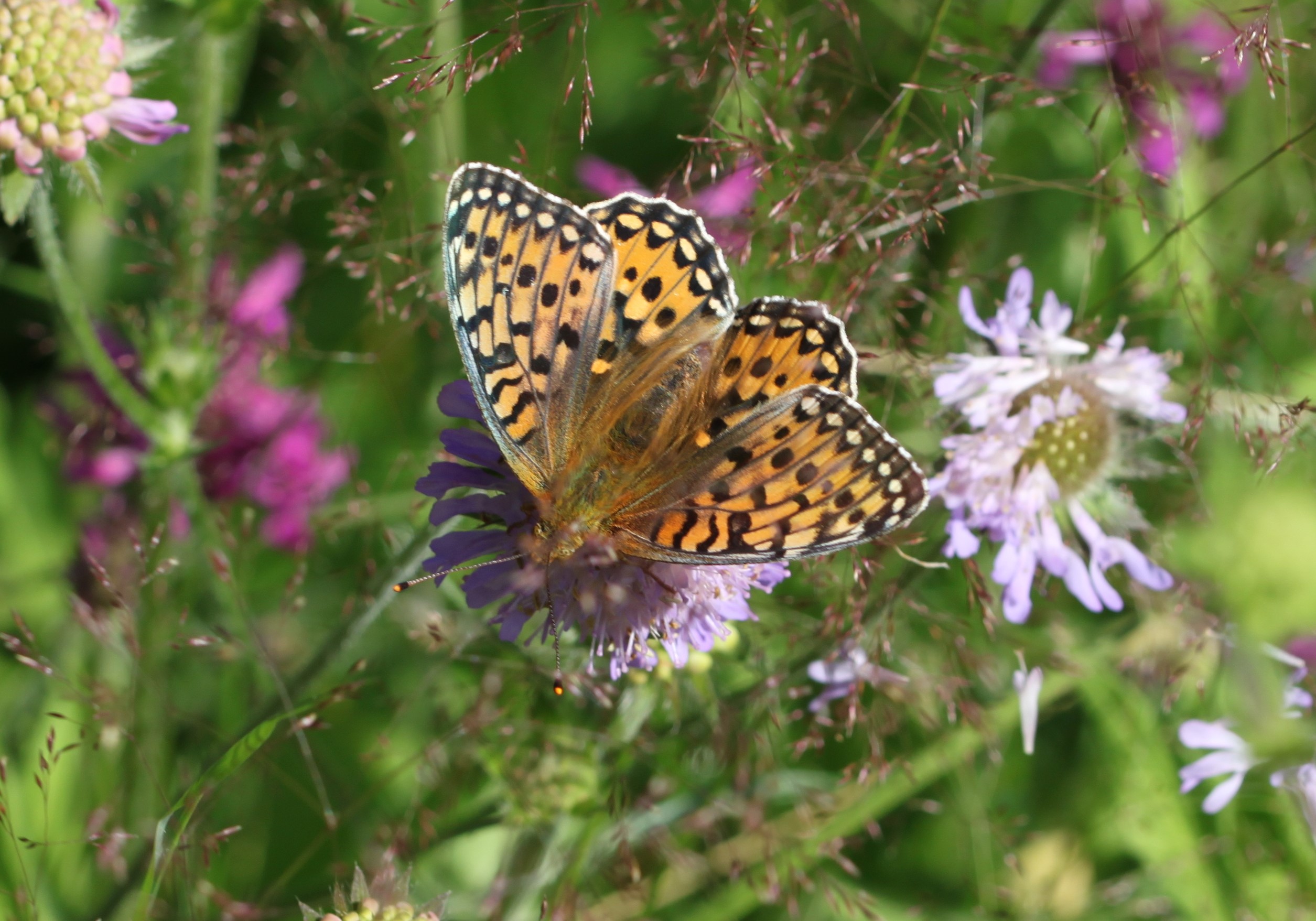
Female nectaring on Field Scabious
.JPG)
Male nectaring on Field Scabious
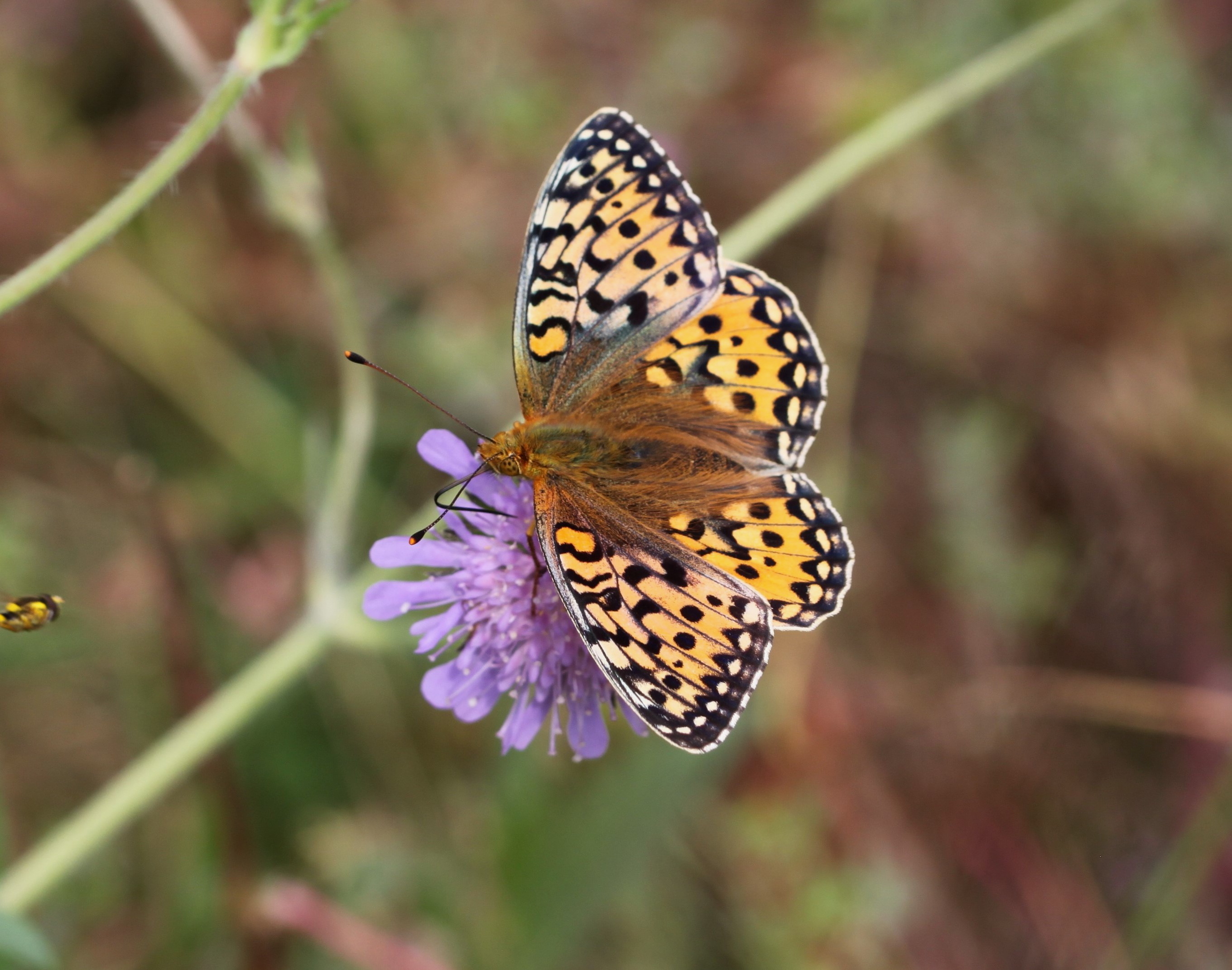
Female nectaring on Field Scabious
.JPG)
Male nectaring on Greater Knapweed (showing the Dark Green)
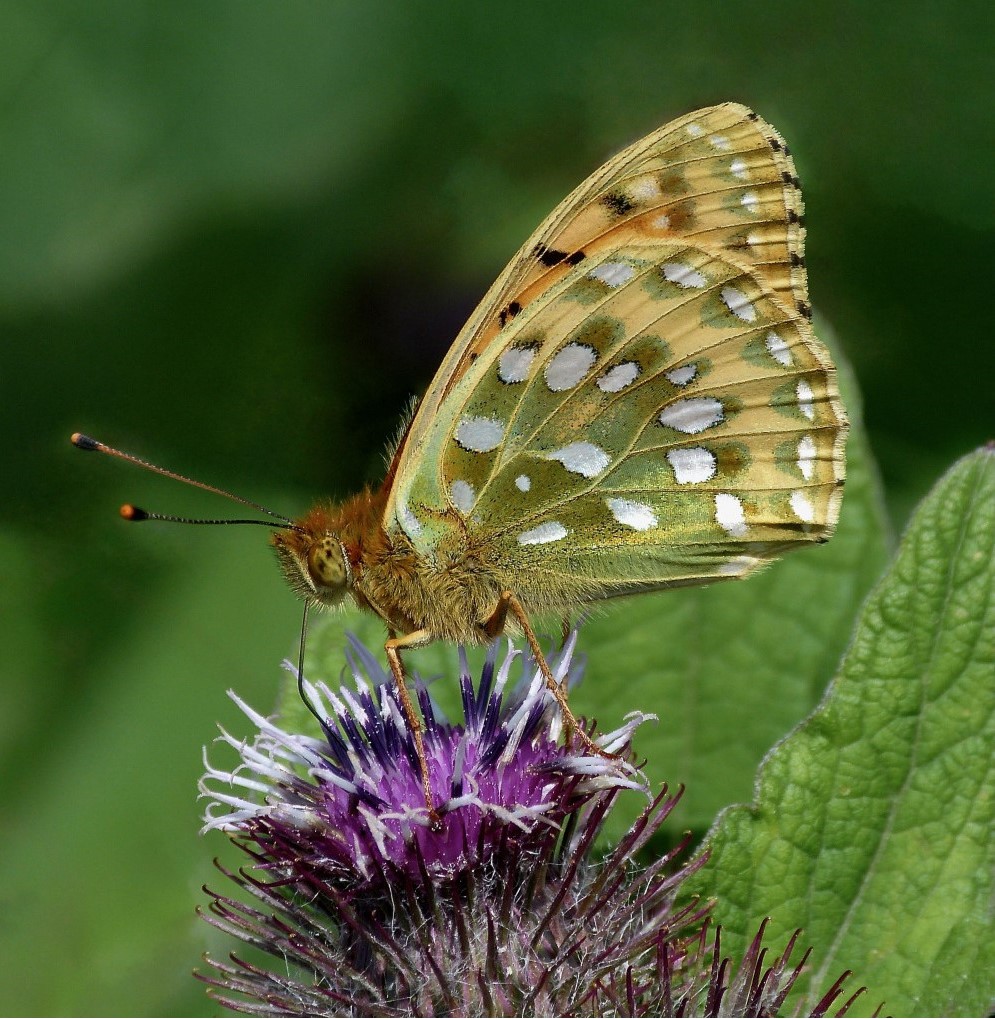
Nectaring on thistle head - photo by John Williams
JPG-13062022-1David_Williams__3023.jpg)
Nectaring on Bramble blossom - photo by David Williams
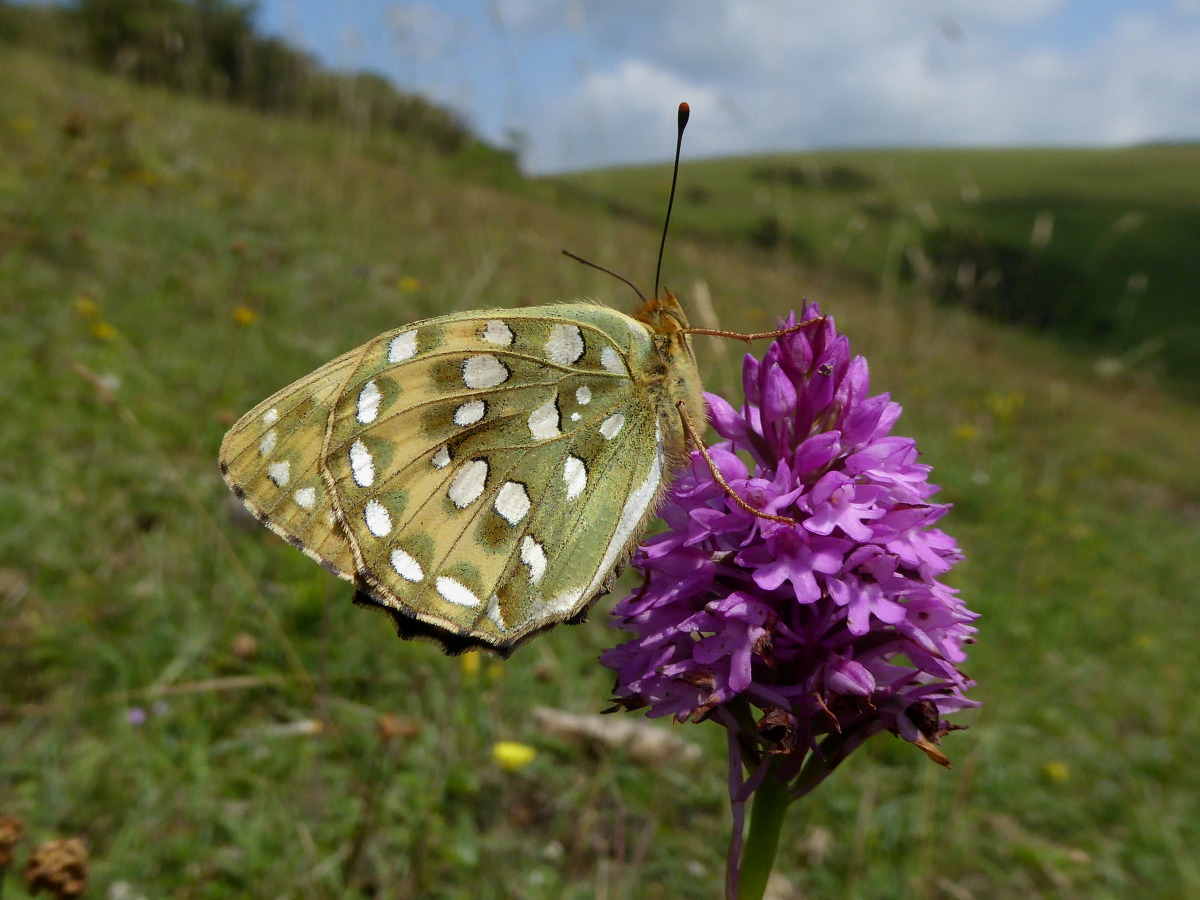
On Pyramidal Orchid - photo by Patrick Moore
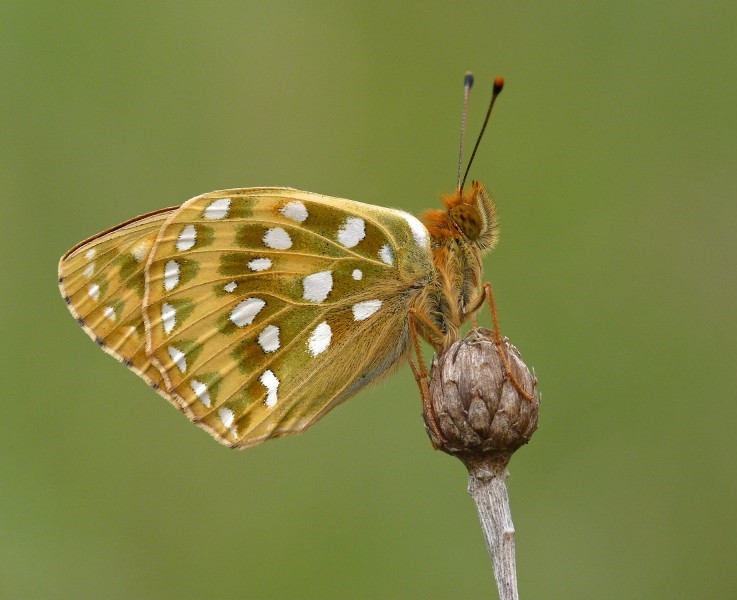
A side-ways view of a Dark Green Fritillary - photo by Neil Hulme
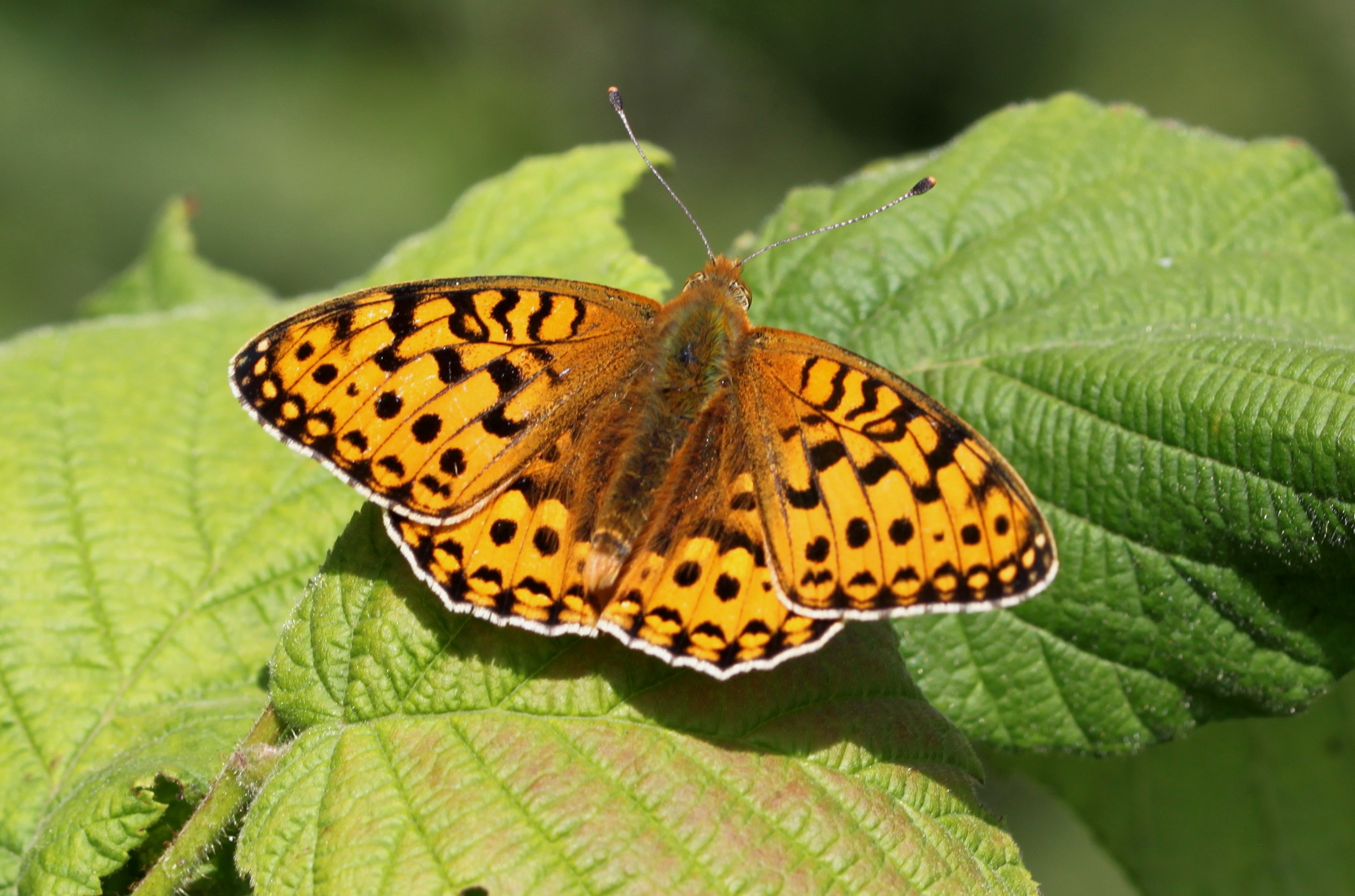
Territorial male on Hazel leaf- photo by Martin Kalaher
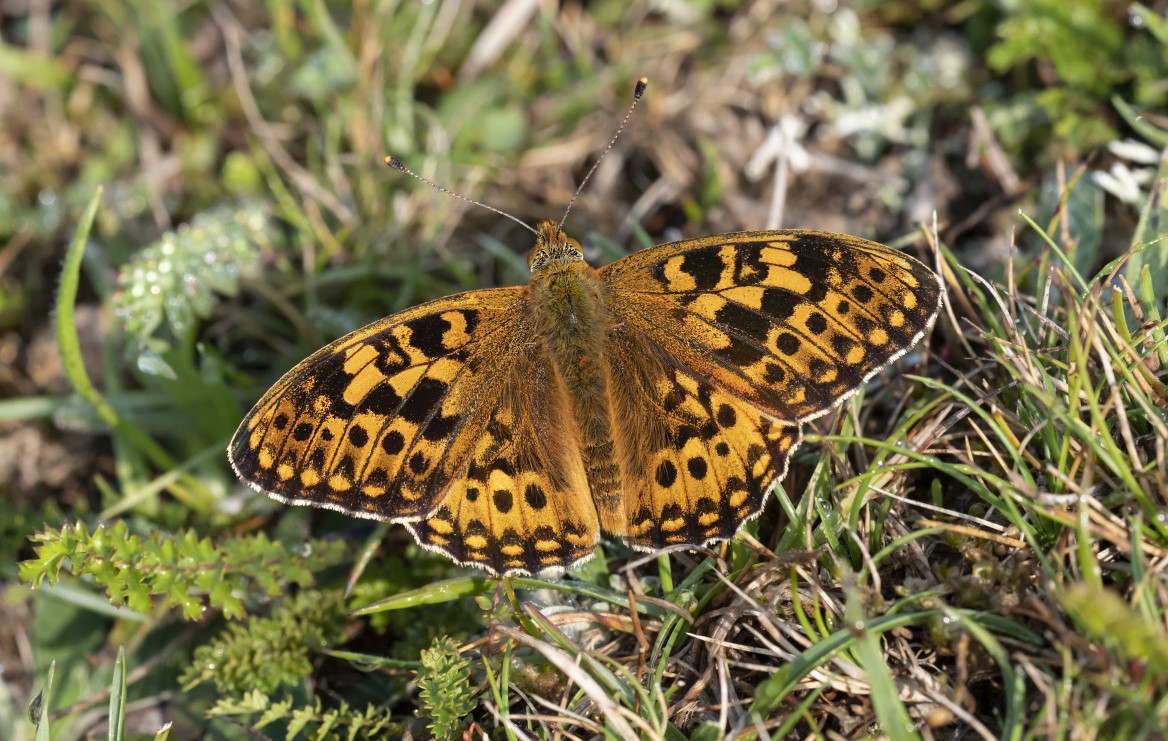
A stunning aberrant DGF - photo by Bob Eade
Butterfly Conservation Dark Green Fritillary