Butterfly Conservation is a registered charity dedicated to the conservation of butterflies and moths. You can find out more about the national organisation here.

Members' Day is on Sunday 22 November at 11:30 at the Adastra Hall in Hassocks ///furnish.bordering.suppose.
Our Chair Dave Brown will start with an introduction to the AGM followed by talks from Gareth Tilley with his "Shining a New Light on Butterflies". Ash Walmsley will talk about the history, ecology and conservation of Ashdown Forest. There will also be an update on the Wood White Project.
For more information click here.

We have a busy programme of working parties all over the county starting in October into March. This has been a wonderful summer for butterflies and with your help we can make 2027 even better.
Information about all the sessions can be found here.
Anyone can post photos of butterflies they have seen in Sussex. Recent sightings include:
26 Oct: Hopefully, some of you may have already read or heard of the Halnaker Hill Farm BNG project, given the wide media coverage - e.g. https://www.theguardian.com/environment/2026/oct/22/thousands-of-butterflies-surprise-experts-on-restored-west-sussex-farmland Although this project is not open to the public, it does demonstrate just how rapidly nature recovery can be achieved, via a number of different routes. When I look at the wide range of habitat restoration projects breaking out all over our county at the moment, including large-scale and ambitious ones (Mill Hill and Friston Gallops immediately spring to mind, but there are many more), I'm filled with optimism and hope for the future.
26 Oct: Many thanks to all who attended the first BC reserves conservation work party of the autumn on Sunday (next event 10.00 am on Sunday 8 November). We made rapid progress in bracken management and re-coppicing birch on Park Corner Heath. Pearl-bordered Fritillary, in particular, did very well here in 2026, with numbers doubling over the last couple of springs. With so much volunteer effort going into habitat management on the reserves, I'm hoping that this trend will continue into 2027. Paul Day's image shows: Front row (L-R); Debbie, Jason, Two-fires, Kate, Maya and Arturo Back row (L-R); Dave, Alan, me, JC, Gary, Helen, Roy, Helen, Richard, Paul and John.
26 Oct: Many thanks to all the BC and SDNPA volunteers who joined Penny Green (Wiston Estate ecologist), Fay (SDNPA ranger) and me on 22 October to continue the habitat restoration work at Washington Chalk Pits. Progress was rapid, and we meet here again at 10.00 am on 4 November in the car park below. As I'm now in report-writing mode, and having just digitised all my 2026 survey records from here, I'm now in a better position to assess the effectiveness of the work done by volunteers over the last couple of winters, and the impact made by cattle grazing courtesy of the Sussex Wildlife Trust animals (thank you, SWT); the results speak for themselves. Over surveys performed on 4.5, 16.5, 23.5, 15.7, 6.8 and 23.8, I counted 1515 butterflies of an incredible total of 35 species (this includes 10 counts of high priority species made during lightening visits on 30.5 and 18.8). The highlights include season-total counts of Duke of Burgundy (19; increasing), Grizzled Skipper (26), Dingy Skipper (74; first and second broods), Silver-spotted Skipper (18; recent colonist), Small Blue (33; increasing), Adonis Blue (23; recolonised the site in May 2026, following a lengthy absence), Chalk Hill Blue (162), Common Blue (256), Green Hairstreak (7), Wall (9), Small Heath (79) and Dark Green Fritillary (4). The timing of the cattle grazing has proven to be perfect; aside from the intention to spread Cowslip seed via their dung, which has worked even better than I predicted (assisting Duke of Burgundy), I was delighted to observe an unforeseen benefit during my visit on 23.8; the site has been colonised by the cowpat-dependent Hornet Robberfly. This rare (but increasing) species of predatory fly has clearly found Washington Chalk Pits to its liking. My count of 11 individuals (the first ever seen in this part of the Wiston Estate) is encouraging, and I suspect we will see the rapid formation of a nationally important colony here. Good news on the chalk grassland sites of the estate does not stop here. On 1.8 I counted an incredible 130 Silver-spotted Skipper on the north-facing slope of Chanctonbury Ring, with 33 in the area above the scrub pinch-point, and 97 below; this was my highest count of this species anywhere within the national park this year. The fact that this was on a fully north-facing slope is even more incredible, and a clear indication of our warming climate and the summer heat of the last two years; unthinkable just a couple of decades ago.
25 Oct: sun 25/10/2026 Friston Forest, E,Sx. After my last visit to Friston on Sun 20th Sept. and finding 21x Brown Hairstreak eggs and seeing 1x adult female, here I am again, between 10.57am and 1.01pm found another 10x BH eggs, this time was not about numbers found but how far east into the forest I could find more eggs, last year the most easterly eggs were at TV 5344 9991, I couldn't find any farther east of this. This year it looks like the butterflies are spreading from the western side of the forest, I managed 2x BH eggs, the first in a more shady position at TV 5396 9936 and one behind a pile of logs at TV 5397 9922, I'll push farther east on anther visit. After last years mowing BH egg disaster things are looking rather good. also saw 1x Speckled Wood and a Clouded Yellow feeding on bramble flowers.
25 Oct: I was surprised but very pleased to see what I presume was the regular Humming-bird Hawk-moth in my garden in urban Brighton this morning despite last night wet and windy weather. It nearly always feeds on the shrubby salvias, particularly the cultivars Royal Bumble ( red ) and Nachtvlinden ( deep purple ) but visits lots of different flowering plants including the Abelia grandiflora shrub which has been in flower for weeks now.
22 Oct: We had another look around Thorney Island on Thursday before the storm Austen arrives overnight. We counted 28 Clouded Yellows most of these were on the southern end of the Island and 2 Red Admiral. There were also c2000 Dark-bellied Brent Geese in the harbour off Pilsey Sands.
22 Oct: My new meadow for chalk-loving plants is coming along nicely and with all this heavy rain the roots will be well-watered. In the past few days I have been weeding around the new plants to give them the best possible chance of survival. I will maintain a very short sward for this new meadow, trying to mimic the best of the short turf of Chantry Hill. I don't reckon to lose any plants but at least two small Horseshoe Vetch have succumbed. Mr Mole may have had something to do with this. He was very annoying for awhile as he was burrowing under and disturbing many of the new plants. Anyway, the gardening has annoyed my neck and so I won't be doing any heavy duty gardening until it is better. A poorly neck doesn't stop a walk over the Amberley Downs and I spent a couple of hours there. Species seen: 26 Clouded Yellows, 1 male Common Blue, 1 Small Copper and 1 egg-laying Red Admiral. The breeding colony of Clouded Yellows is still very active. Photographing them wasn't easy, but I persevered.
22 Oct: As we drove over the railway near Goring station, Val spotted a Small White, so we dropped in on the stretch of shingle between the Sailing Club and George V Avenue. The sun was out but the wind quite strong. Luckily it was bright enough that the Clouded Yellows were settled but hadn't hidden away entirely. I saw the first one and Val then got her eye in and found 4 more. Back home we had some bulbs to plant and Val disturbed a Speckled Wood which hung around for a bit - the first butterfly we've noticed in our garden since 28 September (also Speckled Wood).
Click here for more sightings.
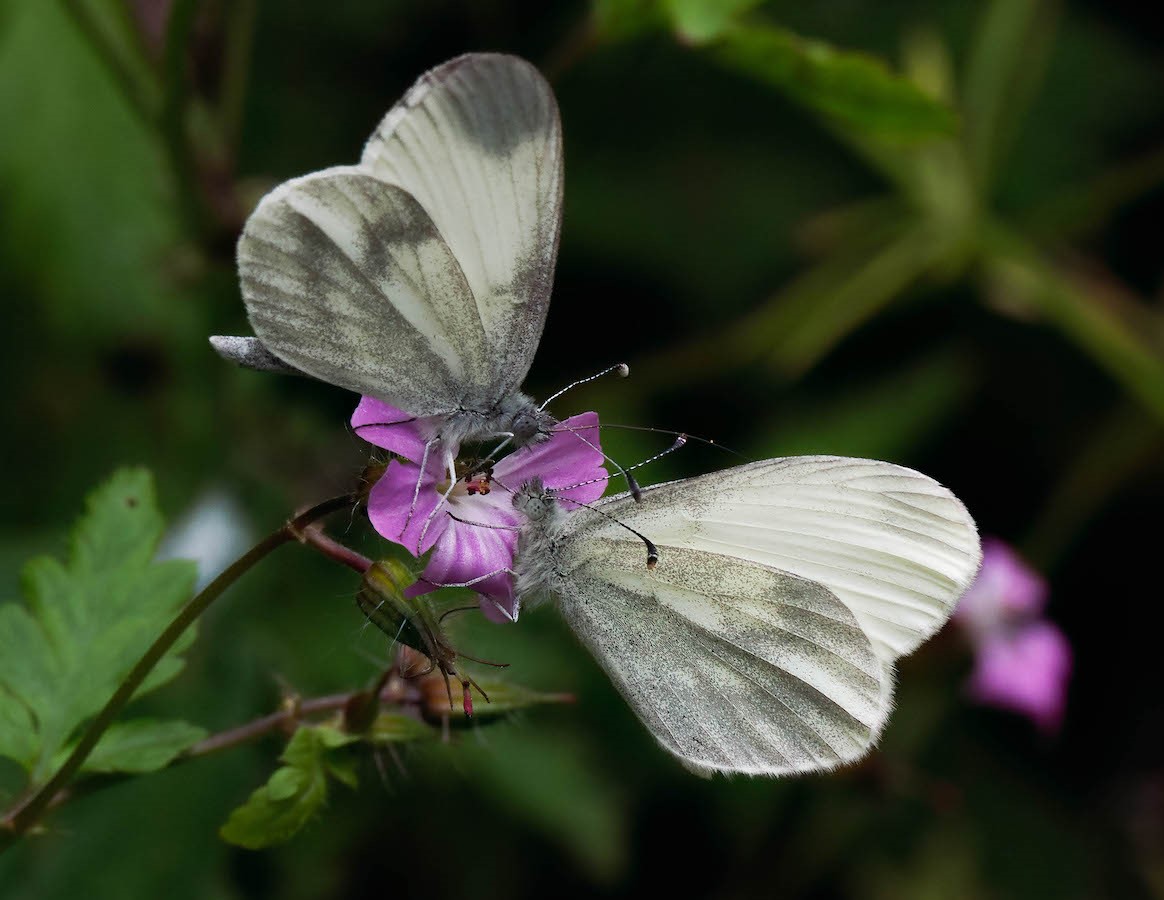
Photo by Graham Hubbard
New colonies of Wood White were recently discovered in West Sussex and our branch is seeking to learn more about this rare butterfly.
Our 2026 Survey Report is now available click here.
For more information on the Wood White Project in Sussex click here.

Photo by Graham Hubbard
Throughout the year we receive interesting sightings records. We have started an exercise to identify notable sightings and look for patterns during a month with a little help from an AI assistant.
To read more click here.
07 Oct: Branch MEMBERS DAY update
07 Aug: Annual Cotoneaster bashing on the Buckle by-pass (A259), Seaford
30 Jun: Martin Kalaher's Open Garden Sunday 12th July.
24 Jun: Scotney Castle - More opportunity to explore
27 Mar: Butterfly Recording Training at National Trust Woolbeding
22 Mar: 2026 walks now appear on the Events Page
28 Feb: Liz Williams Butterfly Haven work day
16 Jan: A summary of Sussex BC work parties in 2026
23 Oct: SxBC Members' Day - Saturday 22nd November 2025 1.30pm – 4.30pm. Latest Update
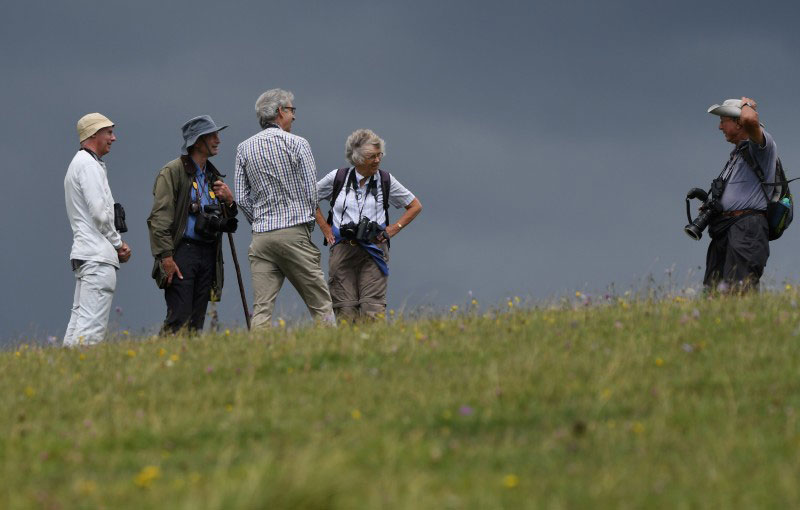
Our branch is organising many butterfly walks in the summer across the county.
Our next events are:
22 Nov: Sussex BC Members Day 2026
Information on all our walks and other events can be viewed here.
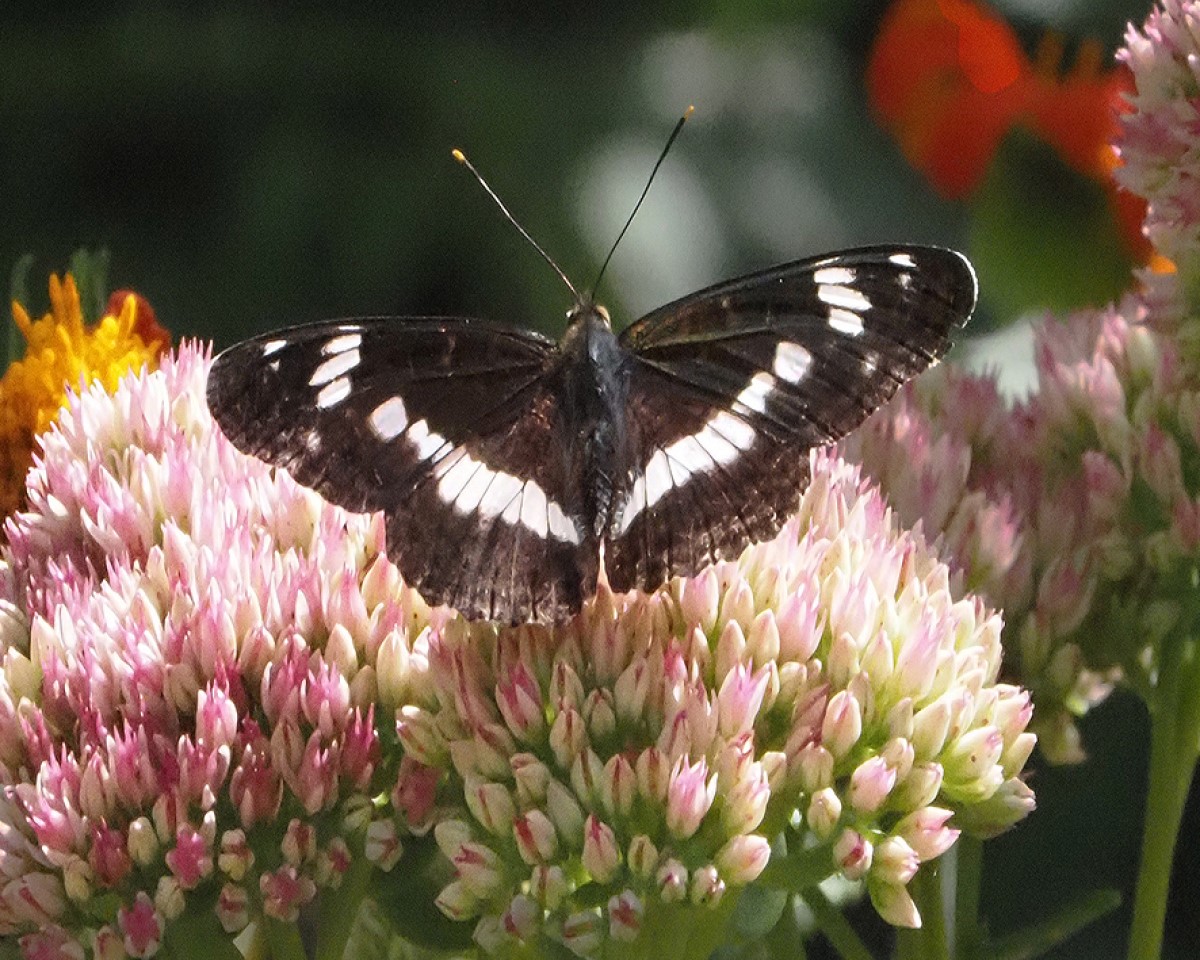
White Admiral, photo by Maurilio Tesa
Martin Kalaher has written a very interesting article titled 'Partial broods in 2025' to read the article click here.
Last month Martin published 'Second brood Dingy Skippers'. To read that article click here.

Photo from our 2025 competition.
Sussex is one of the best counties in the UK to see a wide range of interesting butterfly species.
More information on species can be viewed here.
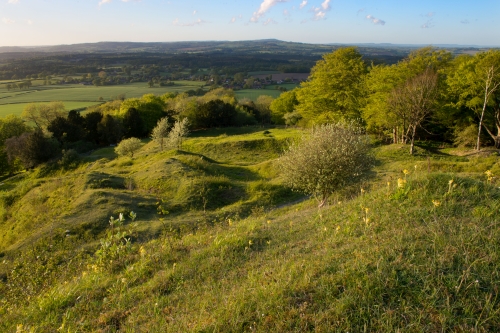
There are many important sites for butterflies in our county.
Information on some of them can be viewed here.

Orange-tip by Gary Faulkner
The results of the 2025 SxBC photo competition were announced at the recent Members' Day.
To see the winning entries click here.
Latest feeds ...
Please remember, you can raise money for your favourite Butterfly Conservation Branch every time you shop online simply by clicking on the easyfundraising logo below and then signing up to support our cause.